Nestle India plans to ramp up production capacity in 2019 as demand rises

Activities and new launches have helped Nestle India maintain leadership positions in more than 85% of product categories
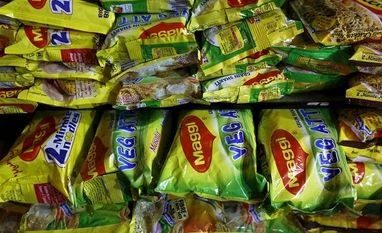
Maggi noodles
The flurry of new launches and aggressive marketing to support the brands have downside risks as well - at least in the short-run
Arnab Dutta Manesar
Last Updated : Feb 18 2019 | 9:17 PM IST
The country's largest listed food and beverages entity Nestlé India is considering expanding its production capacity this year. The maker of Maggi noodles and Kitkat may opt for a green field project after seven years to meet the growing demand of its products.

According to Suresh Narayanan, chairman and managing director, Nestlé India, in 2019, the firm would focus on consolidating its business activities by adding capacity and strengthening the market position of its newly launched products. "We are seriously considering expanding our capacity - either by adding lines in our existing facilities or through a new plant," he said.

While Narayanan did not specify the quantum of investment Nestlé is keeping aside for the move, industry analysts estimate that the firm may need to allocate Rs 300 to Rs 500 crore for the purpose.

The last time Nestlé set up a plant in India was in 2012, when its facility at Tahliwal, Himachal Pradesh, became operational at a cost of Rs 400 crore. Currently, the 107-year-old firm has eight manufacturing facilities in the country. Its first facility at Moga in Punjab came up in 1961.

The timing of the new project coincides with the firm's appetite for growth. In the past three years, since its crown jewel Maggi noodles made a re-entry into the market in November 2015, Nestlé launched well over three dozen products and ventured into new categories like breakfast cereals, nutrition for lactating mothers, specialised health supplements for patients and consumer appliances.


Analysts at Motilal Oswal measured the contribution of new launches at 3 per cent of its domestic sales during January-June 2018. This is higher than 2.8 per cent during the same period the previous year. 

Activities and new launches have helped the world's biggest packaged-food company maintain leadership positions in more than 85 per cent of product categories. Brands like Lactogen and Nan (together 67.7 per cent), Cerelac (96.1 per cent), KitKat, Munch and Milkybar (together 61 per cent), Nescafé (51 per cent) and Maggi noodles (60 per cent) are market leaders in their respective categories.


“We are now focused on all-round growth and not just survival,” said Narayanan, who was flown in from Egypt to rescue the then beleaguered firm by Nestlé’s global management in August 2015 in the wake of the Maggi fiasco. 

Nestlé India is gearing up to launch more products this year. “We have two-three dozen products in the pipeline," he added. Further, Nestlé India is working to increase exports from India to South-East Asian countries and in countries with significant Indian diaspora. Currently, it gets some six per cent of its Rs 11,216 crore sales from the international market.


The flurry of new launches and aggressive marketing to support the brands have downside risks as well - at least in the short-run. Heightened promotional activities during the October-December 2018 period pushed its operating margin down to 19 per cent - much lower than 24.67 per cent in the September quarter and 23.18 per cent for calendar year 2018.  According to Narayanan, Nestlé’s advertisement and promotional costs went up by over 50 per cent during the quarter. “Consequently, our advertising and promotion cost as a percentage of sales rose to 6.5 per cent in the year 2018 from 5.2 percent in 2017.”

However, the cost of promotion would be brought down to the normal level.
Growing appetite
  • The firm has 8 manufacturing units in India — from Moga (Punjab) in 1961 to Tahliwal (HP) in 2012
  • The firm needs between Rs 300 cr and 500 cr investments for a new plant
  • It has 20-40 products in the pipeline
  • There is a 50% rise in cost of advertisement and brand promotion in Oct-Dec 2018 
  • As many as 30-40 products launched since 2015; 3-4 new categories entered

One subscription. Two world-class reads.

Already subscribed? Log in

Subscribe to read the full story →
*Subscribe to Business Standard digital and get complimentary access to The New York Times

Smart Quarterly

₹900

3 Months

₹300/Month

SAVE 25%

Smart Essential

₹2,700

1 Year

₹225/Month

SAVE 46%
*Complimentary New York Times access for the 2nd year will be given after 12 months

Super Saver

₹3,900

2 Years

₹162/Month

Subscribe

Renews automatically, cancel anytime

Here’s what’s included in our digital subscription plans

Exclusive premium stories online

  • Over 30 premium stories daily, handpicked by our editors

Complimentary Access to The New York Times

  • News, Games, Cooking, Audio, Wirecutter & The Athletic

Business Standard Epaper

  • Digital replica of our daily newspaper — with options to read, save, and share

Curated Newsletters

  • Insights on markets, finance, politics, tech, and more delivered to your inbox

Market Analysis & Investment Insights

  • In-depth market analysis & insights with access to The Smart Investor

Archives

  • Repository of articles and publications dating back to 1997

Ad-free Reading

  • Uninterrupted reading experience with no advertisements

Seamless Access Across All Devices

  • Access Business Standard across devices — mobile, tablet, or PC, via web or app

Next Story


