No plans to drill more wells at D1 and D3: RIL
The plan is to enhance work on existing wells in an effort to increase production
BS Reporter PTI Greater Noida After the government decision to allow a higher gas price for Reliance Industries from D1 and D3 fields of KG-D6, the company today said that there are no plans to drill more wells in these two fields.
"We have no plans to drill more wells here," said RIl executive director PMS Prasad. He added that the plan is to enhance work on existing wells in an effort to increase production.
Company is repairing three shut wells on the main fields in the block and will take up a similar number later to further improve output.
RIL and partner BP plc are carrying out remedial action to stop water ingress from choking wells even as the first production well on the block in more than four years ramped up output by over 15% to 13.7 million standard cubic meters per day.
The D1&D3 fields have proved to be less prolific than previously anticipated, forcing RIL to downgrade the recoverable reserves to 2.9 trillion cubic feet (tcf) from 10.03 tcf estimated in 2006. Of this, about 2.2 tcf has already been produced and RIL expects the remaining 0.75 tcf could be extracted through existing wells.
"We are currently doing workovers on three shut wells," Prasad said.
Of the 18 wells on D1&D3, 10 were shut due to water and sand seeping in. The two partners are currently attempting to cut off water ingress into three wells. If successful, they will carry out this work on a similar number of wells in 2015.
In between, they will install a compressor at the onshore terminal to pull gas up from wells that are over a kilometre below the sea.
"Workovers are fraught with risk so we have to see the result of the current workovers," he said.
On the MA field, also in KG-D6 block, RIL-BP added the MA-8 well on January 2 and plan to drill a branch well (called side tracking) later this year by re-entering a shut well.
This well will add up to 2.5 mmscmd to production. D1&D3 produce about 8.5 mmscmd and the rest of the current KG-D6 output of 13.7 mmscmd comes from MA.
BP India head Sashi Mukundan said, "This is part of the next phase of producing the gas in the MA field after the oil has been produced."
A similar side-track well is planned on D1&D3 in 2015 and another one may be looked at on MA in 2015 if the results of the one planned this year are successful, he said.
"We are currently doing water shut-off job on three wells on D1&D3 gas fields before we install a compressor in the first half of 2015," he said.
The KG-D6 fields had become India's largest producing gas fields in March 2010 but in less than a year it witnessed unanticipated water and sand ingress shutting down well after well.

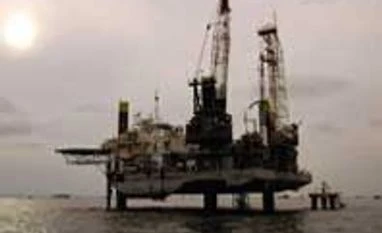 "No plans to drill more wells at D1 and D3: RIL")


 Connect with us on WhatsApp