No sweat over Jet: India's aviation sector looks good even without it

If Jet Airways is taken out of the equation, passengers carried by India's airlines rose in April 2019
Jet Airways
Sai Manish
4 min read Last Updated : May 30 2019 | 12:24 PM IST
There has been a general sense of haggardness about India’s aviation sector in the past year due to a series of unfortunate events. The latest figures from the country’s aviation regulator suggest that the number of air passengers carried by Indian airlines in April 2019 declined on a year-on-year basis, for the first time in six years.

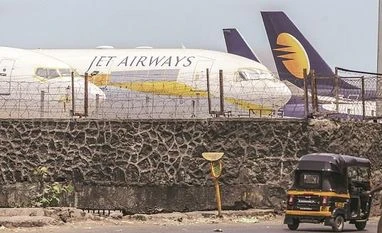
The country’s airlines carried 10.96 million passengers during the month — a drop of four per cent from April 2018. The preponderance of Jet Airways in this decline becomes evident when you look at the life of Indian aviation without the airline. According to official statistics, if Jet Airways, which ceased operations on April 18, were to be taken out of the equation, the number of Indian passengers carried by airlines grew 13 per cent during the period.

A much closer look shows that a combination of factors hit the Indian aviation industry in the first few months of 2019. Airbus A320 Neos suffered engine failures that led to temporary grounding and engine replacements. Two deadly crashes in Indonesia and Ethiopia led to the grounding of Boeing 737 Max aircraft in India. A shortage of commanders and pilots led to grounding and cancellation of IndiGo’s planes earlier this year. The closure of a runaway at the Mumbai airport drastically reduced air traffic at one of India’s busiest airports. And, of course, the crisis at Jet Airways, which unravelled in slow motion over the past few months, finally culminated in the airline ceasing all operations in April. While thousands of passengers have suffered due to cancellations and rising airfares owing to the factors mentioned above, a closer examination of passenger growth and departures in the latter half of 2018-19 reveals that if Jet Airways is taken out of the equation, India’s airline industry hasn’t performed as badly as some doomsday proponents have made it out to be.

If you include the performance of Jet Airways — which started grounding planes from January — the number of passengers carried domestically by India’s airlines every month declined from 12.6 million in December 2018 to 10.96 million in April this year. There were almost 7,000 fewer aircraft departures in April when compared with December or January. The airline seats available in April were almost a million fewer than December last year.


Without Jet Airways and its subsidiary Jet Lite, there is a marginal decline in the number of passengers carried during this period. The number of departures increased by almost 600, while the number of available seats fell by just around 6,000.

By the look of it, India’s airlines seemed to have upped the ante at a time when Jet’s planes were disappearing from the skies. While Jet completely grounded its 113-plane fleet on domestic and international routes only on April 18, there had been a gradual grounding of its planes due to non-payment of arrears to lessors since the beginning of the year.

Most of Jet’s fleet, excluding its 18 wide-bodied planes (Airbus A 330 and Boeing 777–300 ERs), were deployed on domestic routes. This effectively meant that in 2018-19, particularly in the last three months of the year, the grounding of Jet Airways took 95 planes out of the Indian skies. These planes had the capacity to transport more than 12,500 passengers on every single flight. This could have potentially had a deleterious impact on the entire aviation sector, had other airlines not been on a fleet expansion spree.


According to Airfleets, IndiGo added 78 aircraft to its fleet from April 2018 to May 2019. In the first five months this year, IndiGo inducted 18 planes, including seven Airbus A320 NEOs. SpiceJet added 30 aircraft, including the much smaller Bombardier Dash 8 planes, during this period. Air India added 11 planes to its fleet, and Vistara added three.

In effect, the aggressive fleet expansion of India’s other airlines, especially IndiGo, meant that the grounding of Jet’s fleet was nothing more than a temporary air pocket for one of the world’s fastest-growing aviation markets.


One subscription. Two world-class reads.

Already subscribed? Log in

Subscribe to read the full story →
*Subscribe to Business Standard digital and get complimentary access to The New York Times

Smart Quarterly

₹900

3 Months

₹300/Month

SAVE 25%

Smart Essential

₹2,700

1 Year

₹225/Month

SAVE 46%
*Complimentary New York Times access for the 2nd year will be given after 12 months

Super Saver

₹3,900

2 Years

₹162/Month

Subscribe

Renews automatically, cancel anytime

Here’s what’s included in our digital subscription plans

Exclusive premium stories online

  • Over 30 premium stories daily, handpicked by our editors

Complimentary Access to The New York Times

  • News, Games, Cooking, Audio, Wirecutter & The Athletic

Business Standard Epaper

  • Digital replica of our daily newspaper — with options to read, save, and share

Curated Newsletters

  • Insights on markets, finance, politics, tech, and more delivered to your inbox

Market Analysis & Investment Insights

  • In-depth market analysis & insights with access to The Smart Investor

Archives

  • Repository of articles and publications dating back to 1997

Ad-free Reading

  • Uninterrupted reading experience with no advertisements

Seamless Access Across All Devices

  • Access Business Standard across devices — mobile, tablet, or PC, via web or app

Next Story


