
Ola acquires GeoSpoc to build next-generation location technology
Ola has acquired geospatial services provider GeoSpoc, a move that will help the ride-hailing platform develop technologies to make mobility accessible and convenient
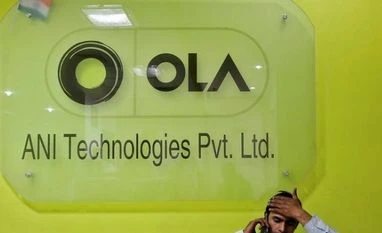 "Ola acquires GeoSpoc to build next-generation location technology")
WebinarsNew
Deep DiveNew
Explore Business Standard
Ola has acquired geospatial services provider GeoSpoc, a move that will help the ride-hailing platform develop technologies to make mobility accessible and convenient
Ola on Tuesday said it has acquired geospatial services provider GeoSpoc, a move that will help the ride-hailing platform develop technologies to make mobility accessible and convenient across shared and personal vehicles.
Ola Chairman and Group CEO Bhavish Aggarwal, in a tweet, said: "New Mobility will require better, newer maps and geospatial services. We're taking the first step to building these by acquiring @GeoSpoc. Look forward to working with @DhruvaRajan and team to build the future of location services!"
He, however, did not disclose the financial details.
In a blogpost, he said enhanced geo-spatial services will also go a long way in improving urban planning including road networks, better public transportation and pre-empt congestion spots.
"Dhruva and his team of Geospatial scientists and engineers will be joining Ola to develop technologies which will make mobility universally accessible, sustainable, personalised, and convenient, across shared and personal vehicles," he added.
While the companies did not disclose the number of employees, GeoSpoc is estimated to have over 80 employees.
Aggarwal explained that as shared and personal mobility penetrate deeper to cover 50-100 per cent of India's population in the coming years, maps will need to improve in a variety of ways.
"Multi-modal transportation options will need geospatial intelligence to understand the unique benefits of each option and provide suggestions accordingly. Maps will need to consider a three dimensional view of the world as aerial mobility models such as drones become more mainstream," he said.
Aggarwal stated that accurate and rich maps with high user context should be available to the population beyond the first 100 million users.
He added that near real-time satellite imagery should be incorporated in maps to provide a better understanding of road quality, as well as improvements such as avoiding poorly lit streets at night for safety even if it is a faster route.
Besides, autonomous driving will need HD and 3D maps which will offer superior visualisation, dynamic real-time updates based on road, traffic and weather conditions.
"We have the data and the expertise to build this utilising our deep understanding of consumer movements as well as our massive network of 2, 3 and 4Ws that provide unprecedented geo-spatial details.
"We can layer this data with new sources such as satellite imagery and visual feeds from our network on-ground to build 'Living Maps' that embody the changing landscape of our world," Aggarwal added.
(Only the headline and picture of this report may have been reworked by the Business Standard staff; the rest of the content is auto-generated from a syndicated feed.)
First Published: Oct 05 2021 | 2:44 PM IST


 Connect with us on WhatsApp