Shridhar H R, assistant professor, BMS Engineering College, vouches for the ease of hiring auto-rickshaws through mGaadi's website. He believes his parents, who often have to travel 16 km from the Bangalore railway station to his house on Kanakapura Road, are now in safe hands.
Geetha, another resident of Bangalore, has to take auto-rickshaws home from work. "It seems at night, all auto drivers overcharge," she says, adding, "Now, I book autos through my phone. I get picked up and don't have to negotiate, which is a blessing. And, it also feels safe."
In Bangalore, those with poor knowledge of Kannada, the local language, fall prey to unscrupulous auto-rickshaw drivers easily. Karan, who has often borne the brunt of this, says, "Now, I know how much to pay. The extra charge of Rs 10 is better than paying double or three times the fare. Also, the waiting time is much less compared to a radio taxi," he says. Now, he either books auto-rickshaws through an app downloaded from the mGaadi website or the company's call centre.
Founded in 2013 by entrepreneurs Solomon Prakash and Vishy Kuruganti, mGaadi is a call auto-rickshaw service of India Drivers Network, a for-profit enterprise. In May, the venture had raised an undisclosed amount from Unitus Seed Fund, an impact investor.
The venture helps both auto-rickshaw drivers and commuters. While drivers are sure of trips, lower waiting time and reduced dead miles, translating into higher incomes, commuters have access to drivers who agree to charge by the meter and whose identities are known; the venture's rating system ensures quality drivers. mGaadi also offers special benefits to the highest-rated and highest-volume drivers.
Business model and opportunity Currently, mGaadi charges drivers a referral fee of Rs 5 a trip, collected both online and offline. Customers pay according to regional transport office-fixed meter charges, with an additional pick-up fee of Rs 10.
| A social entrepreneur par excellence |
| |
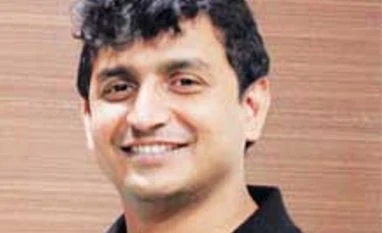
Solomon Prakash, a social entrepreneur, has founded several not-for-profit and for-profit ventures in the social enterprise space.
According to a fellow entrepreneur, Prakash is a pioneer in the space and has inspired many social entrepreneurs.
Before starting mGaadi, Prakash had been the India country director of Ashoka Foundation, the world's largest network of social entrepreneurs. The foundation tries to put into action ideas from its members.
He had co-founded two start-ups — Maya Organic and LabourNet. Maya is a not-for-profit organisation, which works among children and youth, while Maya Organic and LabourNet are for-profit social enterprises. Prajayatna, another social enterprise, works for reforms in the school education system.
Prakash, an engineer by education, began his career in the electro-chemical processing industry. He later worked in Europe for an international youth exchange organisation. In 1989, Prakash launched Maya for the eradication of child labour in India. An education reform programme initiated by Maya is being implemented in thousands of schools in Karnataka and Andhra Pradesh.
Maya's School reform programme, Prajayatna, started in 2001 and works in collaboration with the Karnataka government to 'reclaim' ownership of public schools. The initiative has now scaled to thousands of schools in Karnataka, undivided Andhra Pradesh, UP and Rajasthan.
In 1992, he developed a youth-at-risk training workshop for those living on the streets of Bangalore. Prakash launched a platform for child rights groups to eradicate child labour in 1996. In 2004, Prakash spun off Maya Organic, a network of collective enterprises, where workers from the lower strata of the society produce high-quality products. Maya Organic facilitates each business’ engagement with the mainstream market, enabling it to negotiate, make a profit and thereby benefit the whole group.
LabourNet creates and enhances job opportunities for workers in the informal sector in urban areas. It connects jobs and workers, improves work systems at job sites, encourages skill development, and provides access to social security. He was elected an Ashoka Fellow in 2006.
"We are yet to make cashless transactions possible. Also, we are yet to get to a stage at which the service is available everywhere, at all times. We believe we can get to an optimum level when we exceed the 15,000-auto mark in our network," says Solomon Prakash.
It is expected word of mouth and good marketing initiatives by the mGaadi team will help the venture reach that figure soon.
"We cannot share our revenue figures, as it is a critical time for us to move to our next round of funding," says Prakash.
To scale up, the company plans to enhance the use of technology in its operations. "The company's operations allow it to bring drivers onto the platform; its technology and support are built through a low-cost, high-transaction design. However, the informal nature will have to be managed, with small but compelling changes to ensure high fulfilment," says Prakash.
Though mGaadi targets all 160,000 auto-rickshaws in Bangalore, the average number of daily trips for which is 12, many are unwilling to join a formal structure. "It is a problem to move them from an informal to a more formal work structure," says Srikrishna Ramamoorthy, partner, Unitus Seed Fund.
Road ahead "We want 20,000 drivers in the network in Bangalore by the year-end," says Prakash. The company plans to foray into another city within a year.
However, the company's journey isn't likely to be entirely smooth. "Given what Prakash has been doing, scaling up might be a problem; he is not known for scaling up," says a fellow entrepreneur.
The funds raised from Unitus will be used to scale up technology, expand, and acquire customers and drivers. The company will need capital infusion in 15-18 months. mGaadi says if operations are limited to a sub-region, it will break-even this year. As of now, it is in discussions with potential partners to enter other cities. The company, however, didn't disclose the details.
Challenges For commuters and drivers, a formal structure in this segment is new. "So, we have to learn a lot along the way and amend our approach before we gain insights into this sector," says Prakash, adding, "We will also have to adapt to changes quickly, through technology, and make the whole process easier and more reliable." He adds drivers not on the mGaadi network are suspicious of the venture. While picking up drivers in some areas, mGaadi drivers have faced opposition from other drivers. "This has been happening outside a technology park in north Bangalore," says Prakash.
EXPERT TAKE I believe the founders have the right background, which is good for the venture. mGaadi has successfully raised angel funds from institutional investors, which opens the sector to attracting investment from other players. Going by the numbers, the drivers seem to be getting good traction from the platform. This level of traction will ensure they stick to the platform. However, I believe the growth numbers are a little ambitious to achieve while maintaining similar traction for all drivers. Auto drivers are used to fetching business on the roads and convincing them to do so on phones or Android apps needs a paradigm shift, which might take slightly longer at the beginning. Also, countering aggressive and well-funded cab companies is a challenge one can't ignore in a city such as Bangalore. However, if implemented well, a radio auto-rickshaw service will see faster growth than a radio cab one, as the masses think of auto-rickshaws when they think of local commute. Moving both customers and drivers to the digital platform and having a strong driver training module will be a key to achieving scale.
Mukesh Jha is founder and CEO, Autowale

 "On the road? Dial mGaadi")


 Connect with us on WhatsApp