South to get surplus power from North
Currently all the regional grids, except the southern region, are synchronously interconnected and run at one frequency
BS Reporter Chennai At a time when Southern States are crying over the lack of proper connectivity between the Southern and Northern grids, the Power Grid Corporation of India Ltd (PGCIL) said, early next year it is planing to commence two transmission lines, which will address this problem.
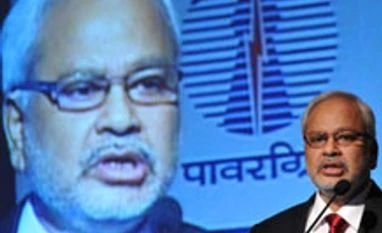
Speaking to reporters on the sidelines of PGCIL’s FPO roadshow N Ravikumar, executive director (southern region) PGCIL said, the corporation is planning to commission the Raichur-Solapur transmission line, and all the southern states, including Tamil Nadu will be benefited by getting power from Northern states.
Presently, all the regional grids, except the southern region, are synchronously interconnected and run at one frequency.
According to reports, the southern region is linked asynchronously with a different frequency with other region’s grids through the high-voltage, direct current transmission system, which has a different frequency.
“We have advanced the project implementation by almost nine months considering the difficult power situation in the south.”
Besides, PowerGrid Corporation is also planning to put in a Chhatisgarh-Pugalur transmission line which will help Tamil Nadu to get power transmitted from other parts of the country.
During peak summer in 2013, deficit in the Southern region is 26 per cent which is the highest in the country.
There have been instances of the northern grid or the western region having had surplus power that could not be transferred to southern states including Tamil Nadu, Andhra Pradesh and Karnataka, since the southern region is not plugged into the national grid.
He said that with the commissioning of two 765kV single circuits transmission lines connecting Raichur and Sholapur in Maharashtra all the five electrical regions in synchronous mode, thereby achieving complete nation as one grid with the same frequency. “Out of the two lines, one circuit under implementation by us while the other one by another company under TBCB route.”
The two lines have a capacity of 2000 Mw.
However, initially, the full capacity may not be utilised.
During the first five months, the focus will be on stabilising the lines, during which the southern states can draw their share of power from Central utilities and other states.

 "South to get surplus power from North")

