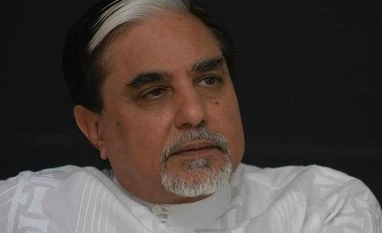
Could the tenacity that made Subhash Chandra, 69, be his undoing? Why is exit such a bad word in the Indian media businesses?
Those are the two key questions that the crisis hitting India’s first media mogul brings up.
In December 1991 Chandra and adman Ashok Kurien, co-founder of Zee Group, flew to Hong Kong. They had been talking to David Manion, president of the newly launched Star TV, to lease a transponder on AsiaSat1. It was owned by a consortium which included Hong Kong-based billionaire Li Ka Shing. His son Richard Li had launched Star TV on the spare capacity left over after meeting regional telecommunications requirements. The satellite covered 38 countries across the Asian region including China and India. Chandra had seen CNN and Star TV when they began airing in India. He knew that the floodgates would open soon. He wanted to be on that satellite with a Hindi channel before anyone else. It was a revolutionary idea considering most Indians had seen nothing but Doordarshan till then. Manion liked the show reel Chandra had sent. He invited them for talks on a 50:50 joint venture in which the transponder lease cost was billed at $1.2 million a year--just over Rs 3 crore then.
The meeting with Richard Li, however, was a disaster. Li did not believe that there was any money to be made in India and refused to do a joint venture. (Li has never discussed the Zee deal in any interview) He also refused to lease the transponder for less than $5 million a year or about Rs 13 crore then. This was over four times the price his managers had agreed on.
Chandra, a gutsy entrepreneur who had made it big in the tough license Raj days, could not believe this. His ego was hurt. And there was the prospect of not being able to get into something that he really thought had potential. He had spent almost a year figuring out the whats and whys of satellite technology, TV, content all unfamiliar words then. In the pre-internet era getting information and putting together a business plan wasn’t simple. And here was this Chinese billionaire refusing him the opportunity that was so evident to him. A furious Chandra, all of 41 then, threw caution to the winds and agreed to pay $5 million.
Li did not give in. It took him a trip to India and a refusal from every media baron he met—Vineet Jain, Sanjay Dalmia, and Nusli Wadia among others—to realise that only Chandra had the gumption and cussedness to pay that kind of money. Only he believed that satellite broadcasting had a future that would enable him to recover his money. In May 1992, Chandra signed a letter of intent with Li, and Zee TV was launched in October.
Essel’s crisis, Zee’s headache
In March 2018, Chandra’s mothership, the Essel Group had revenues of $4.05 billion. Roughly half of this, or Rs 13,825 crore, came from its media businesses including DTH and cable. About a fifth of Essel’s top line came from the Rs 7,126 crore Zee Entertainment, its broadcasting business. Zee generated more than Rs 2,100 crore in operating profits last year. But this ‘jewel in the crown,’ is now threatened.
According to BloombergQuint estimates in March 2017, about 87 firms across the group faced a debt burden of Rs 17,000 crore ($2.4 billion). The collapse of IL&FS, an infrastructure lending firm, in October last year, hit Essel hard. It raised financing costs and stopped roll-overs putting the collateral, which was promoters' equity, at risk. In November it announced that that it was looking to offload 50 per cent of the promoter stake of 41.6 per cent – that is 20 per cent of Zee Entertainment – to a strategic partner. The plan to morph into a global media-tech firm was a very sound one. The timing though was suspect. Even while it was in the process of selling its infrastructure assets—roads, energy--and of speaking to strategic partners for Zee, came a mad bull run on shares. It was triggered reportedly in the wake of a story in The Wire linking a firm with dodgy demonetisation transactions with Essel. Another theory is that a potential suitor who had been ignored triggered the fall to jostle its way into the bidding process. Both Zee and sibling Dish TV plummeted by over 30 per cent in a single day on January 25. An open letter from Chandra and a hastily stitched together agreement with lenders calmed the markets.
“At an operating level this (the crisis) doesn’t impact Zee. It will use up some management bandwidth but the real issues are at a promoter level,” reckons Rohit Dokania, senior vice president research, IDFC Securities. They are. Chandra continued to pick up debt long after it was clear that there was a problem. He says as much in his letter; “As most of the infra companies, even we have made some incorrect bids. In usual cases, infra companies have raised their hands and have left their lenders with non-performing assets, but in our case, my obsession of not walking away from the situation, has made me to bleed Rs 4,000 crore to Rs 5,000 crore. Despite the loss making projects, we continued to pay the interest and the principle, by borrowing funds against our shareholdings in listed companies.” Also “My recommendation made to my brother Jawahar Goel to buy D2H from Videocon was one more key error, which costed me and Jawahar both, a fortune,” says the letter.
'This too shall pass'
Chandra is brutally frank in interviews just like he is in the open letter. It makes for great copy and a refreshing change from corporate homilies. His cussedness, his ego, his reactive nature have made for great anecdotes in the story of Essel’s growth from rice trading to packaging, broadcasting, cable, DTH and infrastructure. It has also meant some close shaves. But precisely because it scraped through Zee is a large and profitable company. It is the very qualities that made Zee the powerhouse it is today, that seem like a threat as it looks to offload equity to bail out the group.
How it makes Punit Goenka, managing director and CEO, Zee Entertainment feel is moot. Chandra’s son has been CEO of Zee since 2008 and has built it into one of India’s largest broadcasters. Now something that dad has done in infrastructure threatens what he has built. Goenka, a cheerful sort of chap, remains unflappable; “This too shall pass. We have brought this company so far with our blood, sweat and tears; there is no way we will give in like this,” says he. The usually accessible Chandra did not speak to Business Standard.
That leads to the second question. Why is exit taken as such a negative in the media business? It is routinely sought after, valuation is built up and equity sold rather proudly in tech and other industries. But for some reason there is a sense of shame attached to selling stake in a media and entertainment industry, where exits are rare. There have been only three major promoter-CEOs to get decent exits: Ronnie Screwvala of UTV to Disney, Tariq Ansari of Mid-Day to Jagran Prakashan, and Raghav Bahl of Network18 to Reliance Industries. Chandra is selling a stake in his media business to deleverage the others. It seems totally fine if you consider that Zee is no minnow. Its 37 channels sit on a massive 20 per cent audience share across languages. Any firm coming into India cannot hope to reach those numbers without investing for a decade. Zee is a good asset for any media firm to buy into.
Lastly remember that by the time the stake in Zee is sold later this year the Indian media market would have transformed. Star, Zee’s arch-rival and the largest media firm along with the Zee Group, would have become a Disney firm. Viacom18 is already a part of Reliance Industries and there is Sony. A Comcast or a Tencent (potential investor names being thrown about) would give Zee the scale and heft to battle Disney in India and the access to build a global business. In many ways then the crisis is pushing Chandra to do to Zee what Rupert Murdoch did to Twenty First Century Fox last year: future-proof it by selling it to a bigger rival.