State Bank of India’s business activity index has fallen below the level before the coronavirus pandemic, affected by lockdowns and restrictions in cities and states to slow down the outbreak.
The in-house Index of India’s largest bank dipped to a low of 75.7 — a level it had attained in August 2020, “and now a clear 24.3 per cent down from-pre pandemic level”.
All indicators, except for labour participation and electricity consumption, have declined significantly in April, the index shows.
“Labour market disruptions are still manageable unlike the first wave” of the pandemic, according to Soumya Kanti Ghosh, the lender’s chief economic advisor.
SBI expects FY22 growth projection at 10.4 per cent for real GDP (gross domestic product) and 14.2 per cent for nominal GDP. The Reserve Bank of India’s (RBI) projection for growth is 10.5 per cent, but analysts, including in SBI, have started revising their growth projections down.
The second wave of the pandemic has affected the country badly, but it might reach its peak “around 20 days from now”, SBI calculated based on the data and experience from India and other countries.
“We believe the peak of the second wave would come around mid-May with active cases reaching around 3.6 million at that point of time,” SBI said.
As most of the costs of vaccine production are fixed, the cost per dose to produce larger batches is less than smaller batches. It said there was merit in having a differential pricing to “lure foreign vaccine manufacturers to India” and prices of vaccines would ease as supply increases.
“With augmenting production capacity of vaccines and new vaccines getting imported, we believe a total of 1.048 billion doses can be given in India by October 2021, in which 15 per cent of the population can be fully vaccinated and 63 per cent can get their first shot,” Ghosh wrote in his report, adding the experience of other countries show infections stabilise after 15 per cent of the population receive the second dose.
“In a country like India, where the demographics change from state to state, city to city, and even from one neighbourhood to another, a highly decentralised approach — seems most logical,” according to SBI.

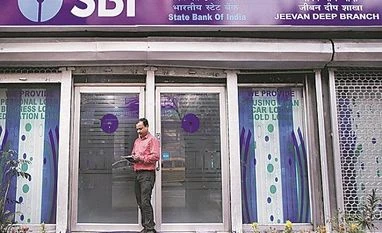 "SBI business activity index falls below pre-Covid level as lockdowns return")












 Connect with us on WhatsApp