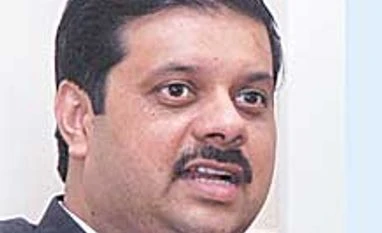
Spreads between steel & metallics might not contract further: Koushik Chatterjee
Interview with Executive director (finance & corporate), Tata Steel
Ishita Ayan Dutt Tata Steel has internal initiatives to improve performance in mind, in the face of adverse market conditions. In his first interview as executive director (finance and corporate),
Koushik Chatterjee shares his outlook for the company and the sector with
Ishita Ayan Dutt. Edited excerpts:
The first phase of Kalinganagar (the Odisha project) will now be commissioned in the first quarter of 2015. Why the further delay? All our guidance (forecast) on commissioning was towards the later end of financial year 2014-15 and we stuck to it. A large integrated steel plant doesn't get commissioned by the turn of a switch - it is a phased plan. Also, a new plant at a new site requires synchronisation of not only construction and availability of raw materials but critical railway, water, power and other infrastructure linkage, along with all approvals to commence operations. These issues have own timelines and challenges.
Currently, the project construction work, along with development of people, processes and social infrastructure, is on at the site in full swing and we are focused on successful completion in line with the plan.
Tata Steel registered significant profits in the last quarter. Is the worst over? The recent financial performance needs to be also seen in the context of the external market environment, both in India and globally, including Europe. There is no market momentum and the gross spreads between steel and metallics continue to be depressed, especially in Europe. Under these conditions, we focus a lot more on internal initiatives across the company. The focus on performance improvement culture in Tata Steel Group helps us to be better prepared to face adversity, especially when the market structurally contracts, as in Europe.
What is the outlook on Europe? What are the biggest challenges facing Tata Steel Europe?
The headline macro data from Europe, especially the UK, has improved significantly in recent months. However, a large part of that is on account of higher consumer spending and home buys, on the back of cheaper consumer credit. The structural shift to a more sustainable economic performance is yet to emerge and will take time. When the market doesn't help and the spread between raw material and steel realisation remains depressed, the best one can do is to look at internal self-help mechanisms in all areas. That's the focus with which our colleagues in Europe have been working. In the Indian operations, over the past 15 years, the performance improvement process has been a never-ending journey, where new targets are set after each milestone is achieved.
What's your view on global commodities, especially iron ore and coal?
A lot of the iron ore and coal dynamics in recent times have been based on how the Chinese demand pull has played out. A three per cent growth in Chinese steel production and a continuing trend of rebound in steel output in the rest of the world will keep iron ore prices range-bound in the next year. On the other hand, if one takes the supply side for ore, it is expected the seaborne market will be modestly surplus by the end of the year and continue its over-supply state thereafter for some time. Following the decision by the Chinese State Council to restrict capacity growth and manage pollution standards, however, the import requirements of higher grade iron ore (fines, lumps and pellets) will increase further. On coking coal, China continues to grow its coal imports to feed its newer fleet of large blast furnaces and, last year, China surpassed Japan as the largest coal importer. Coal prices softened significantly last year and my sense is, it is likely to stay that way. However, some supply readjustment is also happening, as Australian exports are pushing US coal volume out of the seaborne market and US coal producers might have to cut capacity.
How do you see the global steel industry in 2014 and how do you see the M&A (mergers and acquisitions) play in this sector?
The recent capacity cut announcement by the Chinese State Council will make more meaningful differences than the measures taken so far. Stricter pollution norms and lending restrictions to small and medium mills could restrict capacity additions in a significant manner and also close down significant capacity. There are some provinces like Hebei, which had already started closing capacities in 2013 and more will follow. I expect China to, first, reduce the pace of adding new capacities and increase utilisation of existing capacity. These steps, with consolidation of existing Chinese players, bodes well for the industry. With a general rebound in production levels across the world, especially in the US and Japan, there's an expectation that steel prices will remain stable and the spreads between steel and metallics is not expected to contract beyond the current levels.
On the M&A play, it has certainly slowed since the global financial crisis. So have the valuations, compared to the pre-crisis levels. I would expect a lot more bias on intra-region or in-country M&A in the sector, rather than too much of cross-border M&A. The reason is not very difficult to guess. In places where there is structural over-capacity, consolidation through M&A will help enhance sustainability of the industry. The nature of consolidation will also change from straight buyouts to share-based merger, joint ventures of carved-out assets or non-equity based alliances. As the cyclical trough hits other commodities like coal, we might see similar themes, especially in new mining projects, where infrastructure play is becoming more significant and sharing the infrastructure through alliances and collaboration is critical.

 "Spreads between steel & metallics might not contract further: Koushik Chatterjee")

