Srei's great leap back underlines high-risk nature of NBFC business

In the past three decades, the Kanorias have weathered many a crisis, including the NBFC crisis of the 1990s and the global financial crisis in 2008-09
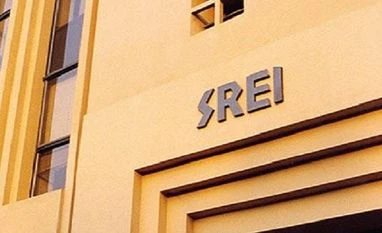
SREI
Banking sources said the entire Rs 30,000 crore has turned bad loan.
Ishita Ayan DuttAbhijit Lele Kolkata/Mumbai
6 min read Last Updated : Oct 08 2021 | 6:03 AM IST
Srei promoter Hemant Kanoria sees similarities bet­ween his predicament and the apocryphal story of King Porus after he lost the fam­ous Battle of Hydaspes to Alex­ander the Great. Asked how he wished to be treated, Porus ap­parently replied, “Treat me as a king would treat another king.”

“We didn’t even say that. But we are also a lender with borrowers and in the same position,” Kanoria said.

The reference is in the context of banks approaching the Reserve Bank of India (RBI) for a resolution that resembles that of the fraud-hit Dewan Housing Finance Ltd, which was recently acquired by Piramal Enterprises via the bankruptcy courts.

On Monday, the central bank superseded the boards of Srei Infrastructure Finance (SIFL) and Srei Equipment Finance (SEFL) and appointed an administrator. SIFL is a listed entity under a holding trust called Kanoria Found­ation and SEFL is a wholly-owned subsidiary.


A debt resolution plan will now be worked out under the Insolvency and Bankruptcy Rules, 2019, bringing the curtains down on discussions of a debt recast with banks. The borrowings of both entities, including exposure to banks, is at about Rs 30,000 crore. Banking sources said the entire Rs 30,000 crore has turned bad loan.

On Wednesday, Adisri Com­m­ercial Pvt Ltd, a promoter en­tity of SIFL, moved the Bombay High Court against the appointment of an administrator. On Thursday, the court dismissed the petition. For the Kolkata-based group that has had as partners BNP Paribas (in SEFL, which it later exited) and the Tata group (via its telecom tower company) this is a long drop.

From a small beginning with flour mills, the Kanorias ventured into infrastructure financing for the construction sector about 32 years ago, then equipment financing and went on to become one of the largest non-banking financial companies (NBFCs) in infrastructure and equipment financing.

The group made a splash in Kolkata’s quiescent business environment. From the tony office in Alipore area — what was once the Russian Consulate — the family built an empire across power, hospitality, real estate, rural digital commerce, apart from infrastructure and equipment financing.

Along the way, the group cut some neat deals. The big one was in 2015 when it sold the tele­c­­om tower business, Viom Net­works, to American Tower Corp­­oration in one of the largest foreign direct investments in the Indian telecom sector at the time. Srei, along with other Kano­ria entities, raked in Rs 2,952 crore.

The idea of the telecom tower business was born in 2005 under Quippo Telecom with 50 towers; in 2009, it entered into a partnership with Tata Teleservices, creating Viom. At the time of the deal, Viom was one of the largest independent telecom tower companies with over 42,000 towers.

But the infrastructure sector went through a slowdown in 2016-2017 and provisioning gui­delines from the RBI pertaining to non-performing assets (NPAs) prompted Srei to start moving away from infrastructure financing and focus on equipment financing.


“In the past four or five years, RBI guidelines for the larger NBFCs stipulated that certain provisions have to be made on 90 days, 180 days, and so on. If we make those provisions on an infrastructure asset, it becomes a problem for us,” Kanoria explained.

Banking sources, however, said disbursements by the equipment finance wing were also lower in line with the management’s strategy to slow disbursements in its books and focus on a co-lending model.

Things started going awry after IL&FS’ collapse. Although Srei’s exposure to IL&FS was only about Rs 1,000 crore, the implosion of this giant made it difficult for all NBFCs to raise money from the market, creating a liquidity crisis. In Septem­ber 2018, SIFL published a med­ia statement to reaffirm its sound financial standing. But an initial public offering (IPO) of SEFL was also shelved post-IL&FS crisis.

Then, the Covid-19 pandemic hit. The RBI directed all lending institutions to offer a nine-month moratorium and recast debts of micro, small and medium enterprises (MSMEs) and infrastructure players. But no such respite was provided for NBFCs, which suffered cash flow shortages as collection from borrowers declined.

In October 2020, Srei appro­a­ched the National Company Law Tribunal (NCLT) with a re­payment scheme that proposed to pay full dues to all creditors in a “structured manner”. But banks were not in the loop.

That was the tipping point in the equation with bankers. “That led to the bankers getting upset,” Kanoria said. But bank­ers say that their move was in course with the regulatory pro­cess to protect lenders’ interest.

In November, banks took con­trol of the cash flows. They also capped the salaries of seni­or executives, and between Dec­­ember 2020 and earlier this year, there have been about 250 exits. In April this year, KPMG was appointed to conduct a forensic audit as part of the proposed debt realignment. That audit is still underway.

But the final straw may have been the probable related-party transactions of Rs 8,576 crore that the RBI flagged. According to Kanoria, Srei had said it would exit these loans but the process would take time. Banking executives said funding to other group entities is now closed.

Besides SIFL, the listed Kanoria Foundation entities are In­dia Power, Shristi Infras­tr­u­c­ture Development Corp­or­ation (real estate and hospitality) and Bha­rat Road Network (BRNL), a road construction company. Of these companies, BRNL has inf­ormed the stock exchanges ab­out the RBI action because SIFL holds a 19.81 per cent stake in it.

There are other unlisted entities under the foundation, Sahaj (rural digital e-commerce) and Quippo (rentals and leasing of infrastructure equipment) being among the major ones.

In the past three decades, the Kanorias have weathered many a crisis, including the NBFC crisis of the 1990s and the global financial crisis in 2008-09. Will it be able to pull out of this one? Even Hemant Kanoria is un­sure. All that he can say at the moment is: “This is the only infrastructure financing company left in the country. So it will be sad to see its death.”

One subscription. Two world-class reads.

Already subscribed? Log in

Subscribe to read the full story →
*Subscribe to Business Standard digital and get complimentary access to The New York Times

Smart Quarterly

₹900

3 Months

₹300/Month

SAVE 25%

Smart Essential

₹2,700

1 Year

₹225/Month

SAVE 46%
*Complimentary New York Times access for the 2nd year will be given after 12 months

Super Saver

₹3,900

2 Years

₹162/Month

Subscribe

Renews automatically, cancel anytime

Here’s what’s included in our digital subscription plans

Exclusive premium stories online

  • Over 30 premium stories daily, handpicked by our editors

Complimentary Access to The New York Times

  • News, Games, Cooking, Audio, Wirecutter & The Athletic

Business Standard Epaper

  • Digital replica of our daily newspaper — with options to read, save, and share

Curated Newsletters

  • Insights on markets, finance, politics, tech, and more delivered to your inbox

Market Analysis & Investment Insights

  • In-depth market analysis & insights with access to The Smart Investor

Archives

  • Repository of articles and publications dating back to 1997

Ad-free Reading

  • Uninterrupted reading experience with no advertisements

Seamless Access Across All Devices

  • Access Business Standard across devices — mobile, tablet, or PC, via web or app

Topics :Reserve Bank of IndiaSreiHemant KanoriaSrei group

Next Story


