The Confederation of Indian Industry has sought the appointment of a 'vaccine minister' and increased availability of jabs in the country. In an interview with Jyoti Mukul, T V Narendran, new CII president and CEO and managing director of Tata Steel, shares his views on the 15 per cent minimum rate suggested by the Group of Seven (G-7) countries and whether vaccination should be compulsory for employees. Edited Excerpts:
Q. What is the nature of the Rs 3-trillion stimulus that CII has suggested to the government? Should direct cash transfer be a part of it?
The Reserve Bank of India last year had headroom on the monetary side. Currently, it does not have much headroom because inflation is creeping up and interest rates are quite low, so from that point of view, we think the solution has to be more fiscal. The starting point for us is that the revenue growth has been better than what people thought a few months back. GST collections are better than what we thought. Even last month, GST was more than Rs one trillion, which to me is a number that looked very far away last year this time. We feel the fiscal deficit will be around 6.8 per cent even after factoring in vaccination expenses and everything else. That is why the Rs 3-trillion stimulus, which is 1.8 per cent of the GDP, will help. There are multiple places it can go. High contact businesses have suffered a lot. In aviation, for instance, we are saying whether ATF can be included in GST. This could get input credit. MSMEs need a lot of support since they have suffered a lot. The Emergency Credit Line Guarantee Scheme for them should be extended to March 31, 2022.
On the consumer side, people incurred a lot of medical expenses. Many have lost jobs and have faced salary cuts. They are postponing expenditure. Just as there is infrastructure led growth, for a consumption led growth, we are saying can we look at GST, for instance, to be brought down by 2-3 per cent for five-six months in order to bring back consumer confidence.
More money could also be set aside for the MNREGA scheme, which had a budget of Rs 1,11,500 crore last year, and Rs 73,000 crore has been allocated this year. That money can be used for creating productive assets and people can also benefit from it. So multiple measures can come in different sections of the economy to make sure the growth momentum that was picking up but got derailed because of the second wave of Covid-19 gets back on track. Vaccination and stimulus together will make sure that we are back to 9-9.5 per cent growth, which is required to catch up with the activity last year or year before the last.
Q. Shouldn't spending on things like health infrastructure increase rather than tax cuts considering the government's revenue situation?
There is already a bigger plan for health infrastructure than what has been there traditionally. We are looking at a fiscal deficit after factoring in the spending in the budget. We are saying make sure the money committed in the budget is spent whether it is health infrastructure or other infrastructure.
Q. Will increased capital expenditure by the government or the companies help considering that demand was low even before the pandemic across many sectors including yours (steel sector)?
It is correct that there has been a slowing down of demand side growth for the last few years even before the pandemic. That is the reason CII has been asking that the government spending on infrastructure should go up because that is a great multiplier; helps to kick start the economy and brings down the cost of operating in India. The government has announced a lot of infrastructure expenditure because that helps steel, cement, mining, heavy earthmoving equipment and automobile sectors. Infrastructure building creates jobs equitably across the country, not just in urban centres. You will see a demand pick-up which started to happen, and if you manage the next few months well, it will happen again. This will also trigger private sector investment which is already happening in the steel sector where capacity utilization has gone up and steel prices and profitability of steel companies have improved and hence steel companies have announced Rs 50,000-60,000 crore of investment over the next few years. Sector-by-sector private companies will increase investment because India is a large market and you would not like to lose the market by not expanding.
Q. What is your take on the view that spending on some large projects should not be done at this point of time when the health infrastructure needs more money and the government is resorting to increased borrowings?
The government should spend at least 3 per cent of GDP on health infrastructure and we are getting close to that. It should not necessarily be government health spending but also from the private sector. There is far more consciousness about the need to invest in health so different states are also doing a lot of work. Large projects take many years. If you get them started now, over a period of time it leads to economic activity.
Across the world, the governments spend a lot more on health than the private sector but it is the reverse in India. The private sector can plug the gap in urban areas much more than rural areas. That is why the government needs to step in. The same thing is in schools because you have private sector investment in urban India but the government has a role to play. I think a balance needs to be found. The government should spend 2.5 per cent on health, and then increase to 3 per cent from the current 1.3 per cent.
Q. How far vaccination has helped in return of economic activity and do you think fully vaccinated people should be asked to come to office and not work from home?
We want the government to work on vaccination level which is 3 million a day and needs to go up to 7 million level. Whether fully vaccinated people should return to office is a call a company should take. There is a need to balance the social needs of coming to the office and getting flexibility that many people have started to enjoy.
Q. Should vaccination be compulsory for employees or should it be persuasion?
The ideal way is convincing but at some point of time, it is also a public responsibility. We have not yet discussed this with our members. Let us wait for a month and let vaccines be available. Today there is no point in insisting. But once vaccines are available you can say that you cannot come unless you get vaccinated. You need to have exceptions for people who have Covid or have other medical conditions and cannot get vaccinated but the principle is you have a responsibility towards your co-workers. Vaccine hesitancy must go.

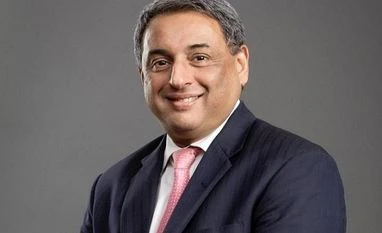 "Vaccination and stimulus will make 9-9.5% growth possible: CII president")










 Connect with us on WhatsApp