Home / Companies / News / We have committed mistakes, says Future Group CEO Kishore Biyani
We have committed mistakes, says Future Group CEO Kishore Biyani
The statements acquire significance in light of Biyani's attempts to move on after a breakdown in talks between his flagship retail company Future Retail and Amazon
In a rare admission on strategy slip-ups, Kishore Biyani, chief executive officer of Future Group, said on Tuesday that his conglomerate comprising retail and consumer businesses had committed mistakes, spreading itself too thin across formats. “We got into just too many categories,” he said when reflecting on his journey over the past few years at the Retail Leadership Summit, currently on in Mumbai.
“I have decided that our focus now will be on food, fashion and home only. Nothing else. Earlier, we got into multiple categories without having the bandwidth or resources. But now, we will keep our focus on a few segments,” he said, adding that his large-format stores including Big Bazaar, Central and Brand Factory were doing better in terms of profitability than his network of small-format stores, which he is looking to ramp up in the next few years.
The statements acquire significance in light of Biyani’s attempts to move on after a breakdown in talks between his flagship retail company Future Retail and Amazon, which was looking to acquire a about 10 per cent stake in the former through an investment arm.
While Biyani has neither confirmed or denied officially he was ever talking to Amazon on an investment in Future Retail, sources at the American e-tailer had told Business Standard ealier this month that it had put on hold plans to buy stake in the firm following guidelines spelt out by the government on foreign direct investment (FDI) in e-commerce.
Biyani has since initiated talks with 7-Eleven, the world’s largest convenience store chain, and is likely to open stores of the Japanese-owned US-headquartered company in India as a master franchisee, media reports had said last week.
The 57-year-old executive, who is referred to as India’s Sam Walton, the founder of Walmart, has also taken a few more steps to beef up his firms’ resources. Earlier this month, Future Retail said it was issuing warrants to promoters for shares of Rs 2,000 crore, taking the latter’s stake to 50.4 per cent from 46.5 per cent on conversion.
In December, the family office of Biyani's had raised Rs 3,000 crore from three investors, including AION Capital, Future group's insurance joint venture partner Generali and its shoe-brand JV partner Sketchers in a bid to strengthen its position and lower debt.
The group has also in the past few years shut down sportswear arm Planet Sports, merged electronics retail chain Ezone with Big Bazaar and rationalised operations on the home retail front, including merging its offline and online home retail divisions under a single entity called Praxis Home Retail. The latter has since been listed on the bourses.
According to analysts, at a broader level Biyani has been consolidating family ownership into a few holding companies to reduce cross-holdings within the group. While pledging shares as a percentage of promoter stake in flagship Future Retail remains high at 47.15 per cent, analysts said Biyani was closely monitoring this. The group counts Future Consumer and Future Lifestyle Fashion among its other key listed entities and has in the past few years also acquired over seven supermarket chains, including EasyDay and Nilgiris, taking its total store count to over 1,400 in 400 cities.
Read this article for free
Register to continue reading premium journalism and analysis from Business Standard.

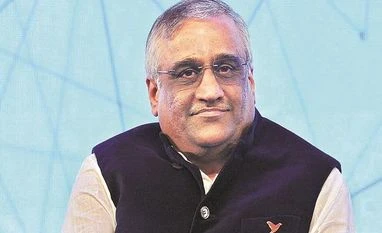 "We have committed mistakes, says Future Group CEO Kishore Biyani")












 Connect with us on WhatsApp