It’s imperative for global brands to have a single point of view. That’s where India as a market needs to be more open-minded, Nishi Suri tells Ritwik Sharma.
In what ways have your experiences in working with developing markets abroad helped you in developing brands in the Indian market, and vice-versa?
I’ve worked in Mumbai, Shanghai and Miami. I think there are more similarities than there are differences. You do have the obvious differences in terms of culture, which is always the biggest difference across markets. But from the point of view of market dynamics, there is a huge gap between the haves and have-nots, there is a huge growing urban population, so those general market dynamics remain pretty constant. Secondly, on reflection India as a market or marketing community has been far more advanced in terms of the ability to build brands in a complex, dynamic and diverse environment. In fact you will find that not just a single market like Brazil but the whole of Latin America is very homogenous. So the homogeneity makes it much easier to be able to develop your brand strategies and drive growth strategies. The other thing that is common is that all these markets have a similar amount of scale. So, personally it has been quite easy to move from scale to scale.
What are the lessons in this for Indian brands?
There is a need for brands to have a global point of view. There is a resistance to openly embrace the global brand point of view. Because of globalisation it’s imperative for global brands to have a single point of view. That’s where India as a market needs to be more open-minded. Global teams have been very open to great ideas coming from anywhere. So it’s really up to us to keep our eyes, ideas and minds absolutely open.
The other thing is that there is an opportunity to really raise the creative end in India. It’s a very mature market but we aren’t able to do it very consistently. You see it in pockets. There is a lot to learn from Latin America in that respect, especially from Brazil, Colombia and Mexico.
Creativity-wise, could you point out what drives places like the Latin America?
We need to stop second-guessing our clients. We tend to feel if it’s an X category kind of client the creative work that you provide will be average. Let’s just unleash the creativity that we have in us. That will help improve the consistency and quality, especially in the area of craft and design.
You talked about how brands need to pick a global point of view. In India ads are localised for different markets within. So, how do you deal with the contradiction?
There is no doubt that’s a challenge. But that’s a challenge for any developing market. You do have different needs for different market segments. Therefore, how you communicate and how your brand responds to them has to be relevant to them. But if there is a strong idea behind a brand it’s possible to take that idea and address differences.
Since Samsung is a leading technology company, how does an association with it benefit a creative agency like Cheil at a time tech-led campaigns are gaining importance? Does it provide an edge?
Most definitely. Because of our Samsung parentage, we are actually more tech-driven than most other agencies. So the way we define ourselves in the marketplace is as an agency that wants to own the position of creativity and technology. When you look at the market landscape, we have found that sweet spot for ourselves where we are able to marry creativity with technology. That’s very core to the DNA of Cheil as a network. An award-winning campaign last year from one of our offices in Asia Pacific was about a sensor for blind swimmers. Every time they reached the edge of the wall, the sensor would kick in and give them a signal. So, these are simple tech-driven ideas that are created and there are many such examples. For Cheil India, technology is really the backbone. We use digital technology to inform and inspire our thinking, and tell us how we are doing in the marketplace and what we should be doing next.
Following the Note 7 crisis last year, were any interventions made by Cheil to help Samsung restore customer faith?
If you look at as a brand, if there were a dip that took place at that point it did make a huge comeback. In terms of brand equity Samsung moved up to the No. 2 position of being the most trusted brand in 2016, from No. 15 in 2015. These things happen in the life of any big brand, in the end it’s more about the trust consumers have in the brand. I wasn’t in the agency at the time, hence I am hesitant to comment about what happened then, but to the best of my knowledge it was a conscious effort or decision for Cheil to not respond in a specific way to the incident.
What are the opportunities and challenges for Cheil South West Asia?
I think our biggest challenge as an agency is to overcome our perception. There’s no doubt that a majority of our business comes from Samsung, but on the other hand the reality also is that we have a good 15-20 other brands which are very well respected in the market. I knew we are sitting on a goldmine in terms of what we have to offer. We are hugely integrated, we don’t have any PNLs (profit and loss) for our specialisms, we have just one PNL at the national level, and that makes a huge difference to the way in which we provide communication solutions.

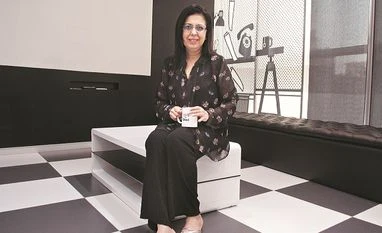 "We need to stop second-guessing our clients: Nishi Suri")












 Connect with us on WhatsApp