UK group Marks & Spencer (M&S) wants to be a multi-channel international retail chain, but it is focused on expansion of its brick and mortar stores in India at the moment.
Venu Nair, managing director, Marks & Spencer, India, speaks to
Nivedita Mookerji on the company's growth plans, possibility of bringing the food business into the country, trading online, and more. Excerpts:
Marks & Spencer has been in India for 12 years. How has the journey been? It's been a good journey. The fact that we are on an expansion drive illustrates that fact. The joint venture (JV) that we got into with Reliance Retail in 2008 is going very well. Currently, we have 27 stores and by the end of summer, we will open another seven outlets.
What's your target for the next financial year in terms of number of stores? I don't want to put a number to it, but we will be very aggressive. We are looking at increasing our total selling space by about 50 per cent in the next financial year. We are looking at opening larger stores.
Does Marks & Spencer want to continue in a JV with Reliance Retail or does it want to come on its own since 100 per cent FDI is allowed in single-brand retail? We want to continue in this JV with Reliance Retail as 49 per cent stakeholder, as it is mutually beneficial. Reliance Retail offers us local expertise in supply chain, infrastructure and real estate advice, among other things. Three Reliance officials are on the Marks & Spencer India board. We have no plan to go alone in India at this point. We don't want to change the shareholding pattern also.
There's been much noise over lobbying by Walmart to enter the India market and for allowing foreign retail chains to come into the country. Has any of that impacted Marks & Spencer? Not really. Our experience in India has been very good.
Marks & Spencer in India does not have the food and café section that the stores have in other parts of the world. Is it because of regulatory issues and do you have plans to introduce food in the India stores, too? We wanted to be focused on clothing and, therefore, we didn't bring food to India. While there are no plans currently on food for the India market, it could change. We could look at food as well.
What about selling products online in India? We have not looked at trading online in India. We want to focus on what we are doing currently.
If the government allows FDI in e-commerce, would you offer online trading in India? We offer online trading in Europe, and it's a growing business in the UK. It's our stated objective to be a multi-channel international retailer. Even so, we can't discuss a future plan about India unless a decision is taken.
Are you planning to open more high street stores than those in the malls now? It is a combination. Our aim is to be close to where the customer is. While we will continue to be mall-focused, we have now started doing high streets. After two high street locations in Delhi, we will open the third one in Bangalore next week.
What is the average size of the Marks & Spencer stores in India? It's around 20,000 sq. ft.
Is real estate a problem in India? It is not an India-specific problem; it's a challenge all over the world.
Do you plan to open M&S stores in hotels also? We don't have stores in hotels yet, but I'm not ruling that out.
How much do the Indian stores contribute to the Marks & Spencer's total revenue pie? I can't disclose figures, but India is among our most focused markets for growth over the next few years. Importance of India will only grow.
What is the growth projection like for the India market? Every category that we cater to has shown double digit annual growth. That makes the company upbeat about investing in the country.
Which are the other focused markets for the company? We trade in 45 countries. Within Asia, India and China are very important.
Is the India market any different for M&S in terms of customer preference and brand positioning? Increasingly, fashion is global. Broadly, Indian customer wants the same latest trend, latest look, latest design and latest colour as anywhere else in the world. When we first came to India, M&S got positioned as a premium retailer and we were seen as expensive. But with time, we have repositioned ourselves as a brand that offers aspirational and stylish products at an affordable price.
What are the unique offerings in the India market? A little bit of localisation that we do is for certain categories where need is felt because of local preferences or the climate. For example, in the western world, formal shirts don't have pockets because they wear jackets. But in India, you don't find people wearing jackets that often. So, pocket here is a functional need.

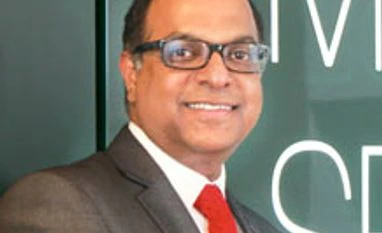 "We've no plan to go alone in India at this point: Venu Nair")

