Every so often, officials at Rockwell Collins Inc pitch a one-day job offer to residents near its Winston-Salem, North Carolina design centre: Earn $100 for sitting in an airplane seat for eight hours.
Show up for the gig, and there’s nary a drinks cart or flight attendant in sight. The rows of seats are arrayed in a testing area at the company’s design and engineering complex. Even without engine hum or overhead bins, “it’s kind of like they’re on the plane,” says Alex Pozzi, vice-president of research and development at the company’s campus here.
Over the years, seat researchers at B/E Aerospace, which Rockwell acquired in April for $8 billion, have gleaned a few insights about life in the air. Most people are just fine for two hours. As the third hour approaches, stiffness increases and comfort declines. At four hours, however, a sort of derièrre detente is achieved, and the levels of discomfort recede. After all, when you’re stuck inside a sealed, speeding tube at 35,000 feet, resistance is truly futile.
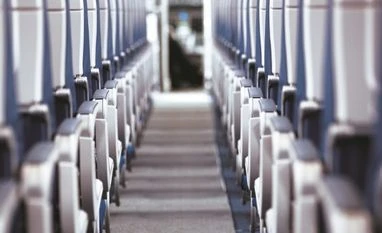
There are many reasons to despise flying, from delays, to fees, to overzealous TSA staff. But shrinking seats and the pain, claustrophobia, and rage they can trigger are arguably the biggest reason why travellers loathe airlines. The modern seat, with its power to pack more customers on to any given plane, is at the very heart of the industry’s 21st century economics. Slimmer seats and less legroom between rows —known as pitch — has enabled “cabin densification” across domestic and international fleets. More seats, quite simply, mean more money and lower operating costs.
There are limits, however, even beyond physical constraints. Regulators mandate a certain ratio of attendants to seats, and carriers want to keep labour costs down. Still, the trend has clearly been moving towards scrunching you. While 34 to 35 inches of pitch was once common for economy class, the new normal is 30 to 31 inches, with several major carriers deploying 28 inches on short and medium flights. Soon, however, that squeeze-play may come to an end.
This rush to squeeze ever-more money out of passenger posture may soon slow. Carriers such as Delta Air Lines Inc are looking to exploit this issue by retaining some creature comforts its competitors have ditched. It has kept nine-across seating on its 777s, “one of the only in the world” to do so, says Joe Kiely, Delta’s managing director of product and customer experience. Delta has also led an industry trend to fly larger aircraft on more routes, reducing the role of regional jets.
Meanwhile in Europe, low-fare king Ryanair Holdings Plc will pitch its 197 seats on the new 737 Max at 31 inches — one more than American, which plans for 30 inches of legroom in a slightly smaller version of the new 737 it begins flying in November.

 "What's stopping airlines from squeezing in more seats")












 Connect with us on WhatsApp