
Citizenship (Amendment) Act rules under preparation: MHA tells Lok Sabha
The rules under the contentious Citizenship (Amendment) Act, which was enacted over a year ago, are under preparation, the Lok Sabha was informed on Tuesday.
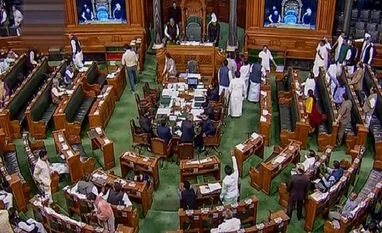 "Citizenship (Amendment) Act rules under preparation: MHA tells Lok Sabha")
WebinarsNew
Deep DiveNew
Explore Business Standard
The rules under the contentious Citizenship (Amendment) Act, which was enacted over a year ago, are under preparation, the Lok Sabha was informed on Tuesday.
The rules under the contentious Citizenship (Amendment) Act, which was enacted over a year ago, are under preparation, the Lok Sabha was informed on Tuesday.
Union Minister of State for Home Nityanand Rai said the Citizenship (Amendment) Act (CAA), 2019 was notified on December 12, 2019 and it came into force with effect from January 10, 2020.
"The Rules under The Citizenship (Amendment) Act, 2019 are under preparation. The Committees on Subordinate Legislation, Lok Sabha and Rajya Sabha have granted extension of time up to April 9 and July 9, respectively to frame these rules under the CAA," he said in a written reply.
The CAA, which facilitates granting of Indian citizenship to persecuted non-Muslim minorities -- Hindu, Sikh, Jain, Buddhist, Parsi and Christian -- of Pakistan, Bangladesh and Afghanistan, was passed by Parliament in December 2019, triggering protests in different parts of the country.
The President had given his assent to the legislation on December 12, 2019.
Under the Act, people from these communities who had come to India till December 31, 2014 due to religious persecution in the three countries will not be treated as illegal immigrants but given Indian citizenship.
After the CAA was passed by Parliament, widespread protests were witnessed in the country. Those opposing the CAA contend that it discriminates on the basis of religion and violates the Constitution. They also allege that the CAA along with the National Register of Citizens is intended to target the Muslim community in India.
However, Union Home Minister Amit Shah had dismissed the allegations and described the protests against the CAA as "mostly political". He had asserted that no Indian would lose citizenship due to the Act.
Clashes between pro and anti-CAA groups had spiralled into communal riots in Northeast Delhi last year which had left at least 53 people dead and around 200 injured.
The Manual on Parliamentary Work states that "statutory rules, regulations and bye-laws will be framed within a period of six months from the date on which the relevant statute came into force".
It also states that in case the ministries and departments are not able to frame the rules within the prescribed period of six months, "they should seek extension of time from the Committee on Subordinate Legislation stating reasons for such extension", which cannot be more than for a period of three months at a time.
(Only the headline and picture of this report may have been reworked by the Business Standard staff; the rest of the content is auto-generated from a syndicated feed.)
First Published: Feb 02 2021 | 7:27 PM IST


 Connect with us on WhatsApp