Covid effect: Cancer patients who delay treatment are at a great risk
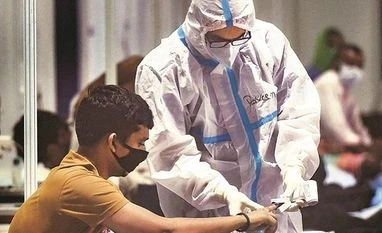
Cancer treatment has taken a hit due to Covid, with several experts flagging an increase in risk of cancer spreading to advanced stages as almost 50% cases are reaching hospitals in later phases
IANS New Delhi Cancer treatment has taken a massive hit due to the Covid-19 outbreak, with several public health experts flagging an increase in risk of cancer spreading to advanced stages as almost 50 per cent of such cases are reaching the hospitals in later phases.
Dr. Rajeev Kumar, a surgical oncologist at the Rajiv Gandhi Cancer Institute and Research Centre told IANS that in pre-Covid times, the hospital used to cater to 70 per cent patients in early stages of breast cancer, but with lockdown the patients have held themselves back, and now almost 50 per cent of cases are reaching in advanced stages.
"In view of Covid-19 outbreak, cancer treatment has taken a hit and it has increased the risk of cancer having spread to advanced stages. There is a need to take all precautions against Covid, but one should not delay the treatment of cancer as that can be hazardous," said Dr. Kumar.
The delay could be attributed to coronavirus fears. Breast cancer is by far the most common cancer in women worldwide. Delays in starting treatment or breaks can allow cancer cells to grow.
"If there is any sort of abnormality in their breasts through self-breast examination, women need to visit a qualified professional or a well-equipped hospital at the earliest," he added.
Dr. Bhawna Sirohi, lead medical oncologist at Apollo proton cancer centre in Chennai, feared that there will be a "cancer pandemic" after the coronavirus pandemic. "In India, 50-60 per cent patients come in the advance stage due to no awareness and screening, but with the pandemic, it has gone up to 70-80 per cent due to fear of the virus," she added.
Dr. Sirohi further said that some of the patients have become so unwell that they are now untreatable. "Patients with bladder cancer come with very high jaundice. At that stage, their liver does not work, and their performance status is also not good. They are only given bed supported care."
Another oncologist attributed this lack of awareness, casual attitude for symptoms, self-medication, lack of facilities or resources. "Some ladies, due to home-work pressure do not report their symptoms. There is a strong need to publicise the symptoms of cancer among the public to raise the awareness of the most common killer," Dr. (Col.) R Ranga Rao, Chairman at Paras Cancer Centre in Gurugram said.
Dr. D.C. Doval, Chair Medical Oncology and Chief of Breast and Sarcoma Services at the hospital, affirmed that there was an urgent need to make people aware about early detection and treatment of breast cancer as well as to conserve the breasts with new technologies.
In recent years, lots of advances have taken place. Traditional chemotherapy is being supplemented with other therapies such as endocrine therapy, targeted therapy or immunotherapy. The management of breast cancer is perfect example of multi-modal treatment and each case of breast cancer requires individualised and specialised care, said Dr Doval.
Dr. Kundan Singh Chufal, Senior Consultant and Unit Head of Radiation Oncology at RGCIRC, informed that techniques such as Hypofractionated radiotherapy have helped reduce the course of treatment in case of breast cancer patients from 6-8 weeks to 3-4 weeks and to even one week in certain patients. This results in better treatment compliance.
About the conservation of the breast after the treatment, Dr. Chufal said that till 10 years ago only 5-10 per cent of the breasts could be conserved leading to a body blow to the morale of the women whose breast had to be removed.
"Currently 40-50 per cent of the breasts are being conserved. If detected early, almost all the breasts can be conserved. Therefore there is a need to create awareness about breast cancer screening," he added.
With new technologies and advancements breasts can be preserved, conserved and reconstructed to look natural. RGCIRC is running a campaign 'Big or Small - Save Them All', through which it has appealed to the women that breast cancer is curable if detected early, Dr. Rajeev Kumar concluded. (Aakanksha Khajuria can be contacted at aakanksha.k@ians.in)
(Only the headline and picture of this report may have been reworked by the Business Standard staff; the rest of the content is auto-generated from a syndicated feed.)

 "Covid effect: Cancer patients who delay treatment are at a great risk")


 Connect with us on WhatsApp