CPCB readies 40 teams to track polluters as NCR air quality worsens

Newly formed teams to help implement preemptive measure under revised GRAP; Delhi govt has created 300 separate teams
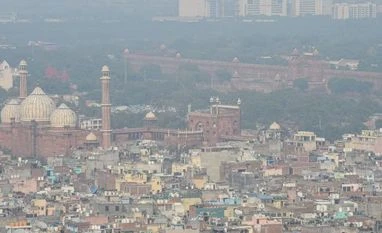
Jama Masjid
(Photo: PTI)
Nitin Kumar New Delhi
4 min read Last Updated : Oct 02 2022 | 6:27 PM IST
As the air quality in Delhi-National Capital Region (NCR) starts to worsen, the Central Pollution Control Board (CPCB) has deployed 40 teams to keep a check on pollution offenders, according to officials.

These newly formed teams will help in the implementation of the preemptive measure set under the revised Graded Response Action Plan (GRAP) to tackle air pollution in Delhi and its adjacent areas. The teams will take action depending on the severoty of the situation under GRAP, which kicked in from October 1, onwards.

“Apart from these 40, the Delhi government has also created around 300 such teams,” an official from the Commission for Air Quality Management said.

Each team will have 2-3 members, said the official, and will keep a check on possible polluters and coordinate with state pollution control teams to curb the cause of pollution up to three days in advance, based on forecasts.

Under the revised GRAP, the environment department will use the new real-time source apportionment system which will help identify the sources of air pollution in real-time and the data will be available from October 20.

GRAP was notified by the Environment Ministry in January 2017 as a response to the severe pollution seen in Delhi and adjoining areas. It is an emergency response plan that is implemented only when the quality of air goes below a certain threshold.

Under GRAP, measures such as enforcing a ban on garbage burning and increasing mechanised sweeping, ban on diesel generator sets, halt on construction activities, schools closer, prohibition of entry of diesel trucks, etc are done depending on the level of pollution.

Until last year, GRAP would come into effect from October 15. But this year it kicked in from October 1. Earlier, measures under the “very poor” and “severe” category of the GRAP kicked in only when the air quality deteriorates and stays in prescribed levels for 48 hours, but this year it would be done three days before such an event.

Earlier, the authorities would implement the measures only after the PM2.5 and PM10 concentrations touched a particular threshold. This time, restrictions will be based on AQI values rather than PM2.5 and PM10 concentration.

The green war room will monitor violations and redress complaints and grievances in keeping with the practice being followed for the last two years.

The GRAP has been classified under four different stages of adverse air quality in Delhi: Stage I - 'Poor', if the Air Quality Index (AQI) is 201-300; Stage II - 'Very Poor' if AQI ranges from 301-400; Stage III - 'Severe', if AQI is 401-450; and Stage IV - 'Severe Plus', if the AQI is above 450).

Though the department has taken these steps in advance, experts worry about the stubble burning in the adjacent Punjab.

Sunil Dahiya, an analyst at Centre for Research on Energy and Clean Air, while highlighting the scale of paddy cultivation in Punjab and the need of manpower needed to sensitise and stop farmers from stubble burning, says, “there will be fires in 10 fields, stopping 2 will hardly have any impact. The government lacks manpower and will to stop farmers from burning stubble.”

Stubble burning is considered a key contributor to air pollution in Delhi-NCR. Paddy straw burning is practised widely in Punjab, Haryana, and Uttar Pradesh to clear the field for the next crop sowing, especially during October-November.

On Friday, Environment Minister Bhupender Yadav reprimanded Punjab over its preparedness in taking concrete action on the ground towards Air Quality Management. “The state government had not planned adequately for management of almost 5.75 million tons of stubble which is a huge gap and is likely to have an adverse impact on the air quality in Delhi and NCR region,” Yadav said.  

Experts opine, the late withdrawal of monsoon has also increased the chances of stubble being burnt in one go, as farmers will have a small window left to grow rabi crops. The paddy harvesting would peak in the fag end of October.

According to the Indian Agricultural Research Institute (IARI)’s residue burning data, 113,304 crop burning cases were reported in October and November of 2021. 85048 such cases were recorded in Punjab and Haryana.

As per various estimates, farm fires' contribution to Delhi-NCR air pollution ranged from 14 per to 48 per cent in the peak Diwali season in 2021.

According to the (IARI)’s real-time monitoring of paddy residue burning events, 192 fire counts have been recorded in Punjab from September 15 to September 30, while 2 such incidents were detected in each Haryana and Rajasthan. 12 incidents were also detected in Uttar Pradesh. Moreover, on Sunday, 45 incidents were reported in Punjab.

One subscription. Two world-class reads.

Already subscribed? Log in

Subscribe to read the full story →
*Subscribe to Business Standard digital and get complimentary access to The New York Times

Smart Quarterly

₹900

3 Months

₹300/Month

SAVE 25%

Smart Essential

₹2,700

1 Year

₹225/Month

SAVE 46%
*Complimentary New York Times access for the 2nd year will be given after 12 months

Super Saver

₹3,900

2 Years

₹162/Month

Subscribe

Renews automatically, cancel anytime

Here’s what’s included in our digital subscription plans

Exclusive premium stories online

  • Over 30 premium stories daily, handpicked by our editors

Complimentary Access to The New York Times

  • News, Games, Cooking, Audio, Wirecutter & The Athletic

Business Standard Epaper

  • Digital replica of our daily newspaper — with options to read, save, and share

Curated Newsletters

  • Insights on markets, finance, politics, tech, and more delivered to your inbox

Market Analysis & Investment Insights

  • In-depth market analysis & insights with access to The Smart Investor

Archives

  • Repository of articles and publications dating back to 1997

Ad-free Reading

  • Uninterrupted reading experience with no advertisements

Seamless Access Across All Devices

  • Access Business Standard across devices — mobile, tablet, or PC, via web or app

Topics :Stubble burningAir Quality Indexair pollutionNew DelhiDelhi-NCRAir quality

Next Story



