
Delhi HC asks govt to ensure Covid sero survey report not leaked to media
A bench of Justices Hima Kohli and Subramonium Prasad noted that one of the court staff got his test report after four days and said such things should not happen
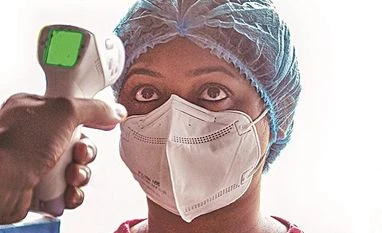 "Delhi HC asks govt to ensure Covid sero survey report not leaked to media")
Explore Business Standard
A bench of Justices Hima Kohli and Subramonium Prasad noted that one of the court staff got his test report after four days and said such things should not happen
The Delhi High Court Tuesday directed the AAP government to ensure that the report of the fourth sero surveillance, which is likely to conclude soon, shall not be leaked to the media till the matter is heard by it.
The high court also expressed displeasure over delay in informing persons about their result of COVID-19 test, which should be conveyed in 24 hours.
A bench of Justices Hima Kohli and Subramonium Prasad noted that one of the court staff got his test report after four days and said such things should not happen.
The high court was informed by Delhi government counsel Satyakam that the fourth sero surveillance will conclude on October 22 and the report would come out after a fortnight.
The counsel said one of their senior professors who will analyse the sero survey reports is suffering from COVID-19.
The bench directed that the sero survey report be not leaked to the media before the next date of hearing on November 11.
It also sought the stand of Indian Council of Medical Research (ICMR) on a new test called Feluda, which is being marketed by TATA sons and is pending approval from ICMR.
The high court was hearing a PIL by advocate Rakesh Malhotra seeking increasing the COVID-19 testing numbers in the national capital and getting speedy results.
The high court had earlier observed that the AAP government was "frittering away" a part of its RT-PCR testing whose numbers were "abysmally low" when compared to the rapid testing figures and had said it made no sense when the daily number of coronavirus positive cases were averaging around 3,500-4,000.
RT/PCR, short for Reverse Transcription Polymerase Chain Reaction, is a laboratory technique widely used in the diagnosis of genetic diseases and to measure gene expression in research.
The government had told the bench that the third of sero surveillance carried out by it in Delhi between September 1 to September 7 has found that seroprevalence of antibodies to COVID-19 in citizens of the national capital has reduced from nearly 29 per cent in August to 25 per cent in September.
The bench on September 16, had asked the Delhi government to increase the RT-PCR test capacity to the maximum possible to detect COVID-19 infection, as RATs were only 60 per cent accurate.
(Only the headline and picture of this report may have been reworked by the Business Standard staff; the rest of the content is auto-generated from a syndicated feed.)
First Published: Oct 20 2020 | 9:10 PM IST

