Deloitte, one of the Big Four accounting organisations, has developed "a very innovative, simple, fit-for-purpose programme" in the fight against COVID-19 that can be scaled up in a quick span of time, its CEO Punit Renjen said on Monday.
"We have designed, I believe, a very innovative, simple, fit-for-purpose programme that is integrated," Renjen told PTI, a day after the "Sanjeevani Pariyojana" (life of project) was kicked off in Karnal district of Haryana.
The programme, designed and supported by Deloitte, the Public Health Foundation of India and the Post Graduate Institute of Medical Sciences in Haryana, is a supervised, virtual home-care initiative to help people quickly access healthcare for mild to moderate symptoms of COVID-19.
"We have created a playbook and codified this, so we can scale it across the state. We are now going to take this and then implement it in the next district, which is Rohtak," Renjen said.
In addition to investing Rs 5 crore on the project, Deloitte has deployed a team 25 of its personnel on a pro bono basis.
The multinational has also come up with a plan to do this as a statewide effort. "This is the first time in the country that we have done this. It (the programme) will allow us to address the current Covid wave. It will allow us to address the third wave if that comes about. But if this programme sticks, it can be an opportunity for us to provide primary healthcare in rural communities," Renjen said in response to a question.
"The real magic here is the integration. For the first time, everything integrated, from the command centre to the telemedicines, virtual health to the home health kits to the tiered hospitals, to the ASHA workers. All of them working together in a coordinated way with the local administration, the deputy commissioner and the superintendent of police," he said.
Deloitte, he said, has lost about 30 of its employees in India to COVID-19. The programme itself evolved based on Renjen's personal experience of his mother in Rohtak, who tested positive for the viral disease.
"My mother went through it at home. When I saw that she was sending back to the doctor every day...the daily count for my mother in terms of what is the oximeter reading, what is the pulse reading, what is the temperature, sent by text messages to the doctor...if it can happen to my mother, it can happen to anyone," he said, reflecting on the genesis of the project that has now hit the ground and is running in Karnal.
There are about 16 lakh people in Karnal, which is predominantly a rural district. There are about approximately 5,500 COVID-19 cases with a positivity rate of over 20 per cent. "These numbers have started coming down, but when we started, that was the case. Our initial assessment with the government of Haryana was that 94 per cent of these patients could be treated at home, five per cent in regular hospitals and one percent in the ICU.
"If you think about it, what it does is if you have a programme, it alleviates the rush for hospital beds," Renjen said.
The programme has seven aspects, including a command control centre, augmenting the existing call centre capabilities with a COVID-19 hotline, mobilising 200 medical students to provide virtual health services for mild to moderate cases with supervision and deploying ALS ambulances and mobile pharmacies.
It also includes providing medical equipment like oxygen concentrators to a field hospital and launching an awareness campaign on home-care protocols and leveraging community workers (the ASHA network) to support in home care.
"I think we have created a playbook. We expect that we will get Rohtak done in two weeks. My hope is that we can scale it for the entire state of Haryana," Renjen said, adding that there have been talks to make it a countrywide project.
"I have talked to other organisations as well, some foundations that are very interested. My hope is that we can, at the least, demonstrate Karnal and Rohtak very quickly and prove that the system can be scaled. Then my hope is we do Haryana and other states," he said.
This is a unique programme, Renjan said, adding, "It really took the work of Deloitte, working with these medical leaders and the state to come up with this innovative and fit-for-purpose programme.

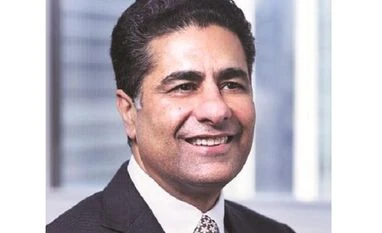 "Deloitte has designed programme that can be scaled in Covid fight, says CEO")


 Connect with us on WhatsApp