
Doklam standoff: India-China joint military exercise uncertain this year
We sent a message to the Chinese side but there was no response: Govt
 "Doklam standoff: India-China joint military exercise uncertain this year")
WebinarsNew
Deep DiveNew
Explore Business Standard
We sent a message to the Chinese side but there was no response: Govt
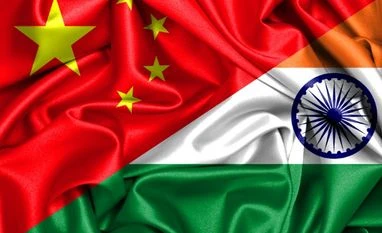
Given the current stand-off over the Doklam plateau, the fate of the annual India-China Hand-in-Hand joint military drill, first held in 2007, appears uncertain with no word from the Chinese side, which is supposed to host the exercise this year.
An Initial Planning Conference (IPC) is usually held in the host country in June-July but so far there has been a studied silence from Beijing, sources said.
"The IPC takes place in the country where the exercise would be held. We sent a message to the Chinese side but there was no response," the source said.
"It should have happened latest but July end, but the IPC never took place," the source added.
From all possible indications, the IPC is unlikely to take place any time soon.
After the IPC, a Final Planning Conference (FPC) is held in the visiting country, usually in September.
The exercise is usually held in October or November.
"We asked for details of progress on holding the exercise, but we have no communication from the Chinese side it," the source said.
So far, six editions of the exercise, which has focused on anti-terror operations in past years, have been held.
The first joint exercise was held in 2007 Kunming in China's Yunnan province and in 2008 in Belgaum in Karnataka.
However, following China's denyial of a visa to the Northern Army Commander in 2009, citing its "sensitivities" on Kashmir, the exercise remained suspended for almost five years.
It was resumed in 2013 and had been held regularly since then, the last being at Pune's Aundh Military Camp in 2016.
The Indian Army has in past said that the basic objective of the drill is to enhance confidence and trust between the two armies, which may be called upon to grapple with anti-terrorism operations under the UN mandate.
The Indian Army has also said that the exercises is an important step to uphold the values of peace, prosperity and stability in the region.
That, however, seems a distant dream as a stand-off continues since mid-June at the tri-junction of India, China and Bhutan when Indian troops moved in to prevent China from constructing a road on Bhutanese territory in the Doklam plateau. China claims the Doklam plateau is a part of South Tibet.
Earlier this week, China claimed India had partially withdrawn its troops, which New Delhi firmly denied.
On July 25, a Chinese transgression took place in Uttarakhand when Chinese troops came about one kilometer into Indian territory.
First Published: Aug 03 2017 | 8:26 PM IST


 Connect with us on WhatsApp