Using less than a drop of blood, a new test can reveal nearly every virus a person has ever been exposed to, scientists have reported. The test, which is still experimental, can be performed for as little as $25 (Rs 1,600) and could become an important research tool for tracking patterns of disease in various populations, helping scientists compare the old and the young, or people in different parts of the world.
It could also be used to try to find out whether viruses, or the body's immune response to them, contribute to chronic diseases and cancer, the researchers said.
"I'm sure there'll be lots of applications we haven't even dreamed of," said Stephen J Elledge, the senior author of the report, published in the journal Science, and a professor of genetics at Harvard Medical School and Brigham and Women's Hospital. "That's what happens when you invent technology - you can't imagine what people will do with it," Elledge said. "They're so clever."
The test can detect past exposure to more than 1,000 strains of viruses from 206 species - pretty much the entire human "virome," meaning all the viruses known to infect people. The test works by detecting antibodies, highly specific proteins that the immune system has made in response to viruses.
Tried out in 569 people in the United States, South Africa, Thailand and Peru, the blood test found that most had been exposed to about 10 species of virus - mostly the usual suspects, like those causing colds, flu, gastrointestinal illness and other common ailments.
But a few subjects had evidence of exposure to as many as 25 species, something Elledge said the researchers had yet to explain. There were some differences in patterns of exposure from continent to continent. In general, people outside the United States had higher rates of virus exposure. The reason is not known, but the researchers said it might be due to "differences in population density, cultural practices, sanitation or genetic susceptibility."
Scientists not associated with the work said it had vast potential. "This will be a treasure trove for communicable disease epidemiology," said William Schaffner, an infectious disease expert at Vanderbilt University. "It will be like the introduction of the electron microscope. It will allow us to have more resolution at a micro level."
One possibility, Schaffner said, would be to deploy the test in large populations to find out the ages at which children are exposed to various illnesses in order to help determine the best timing for vaccinations. Another idea, he said, would be to test collections of frozen blood samples - government laboratories and some universities store them from previous studies - to learn about historical patterns of disease.
The most obvious candidates are autoimmune diseases like multiple sclerosis and Type 1 diabetes. Researchers have long suspected that viruses may contribute to such ailments, by provoking the immune system to produce antibodies that mistake a person's own cells for viruses and attack them. But no such viruses or antibodies have ever been identified. To look for them, scientists had to pick suspect viruses and test for them, essentially one by one.
The technology could help answer questions about cancer, he said, such as why the same disease progresses faster in some patients than in others, and why chemotherapy works better in some people. Antibodies may play a role, he said.
Another surprise came from those infected with HIV. Elledge expected their immune responses to other viruses to be diminished. "Instead, they have exaggerated responses to almost every virus," he said. The researchers don't know why.
The test has some limitations. It can miss certain very small viruses or past infections to which the immune response has dwindled. But newer versions of the test may be more sensitive, Elledge said. "While not perfect, we think this method represents a very large step forward toward the goal of comprehensive analysis of viral infections," he said.
©2015 The New York Times Service

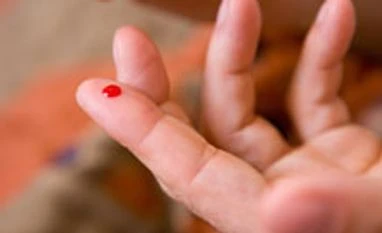 "Every virus a person has had can be seen in a drop of blood, researchers find")

