
Father of cellphone sees dark side but also hope in new technology
Holding the bulky brick cellphone he's credited with inventing 50 years ago, Martin Cooper thinks about the future
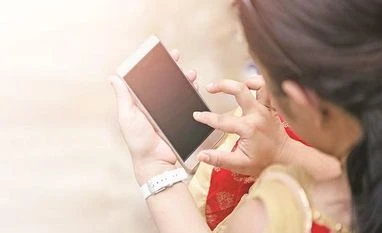 "Father of cellphone sees dark side but also hope in new technology")
WebinarsNew
Deep DiveNew
Explore Business Standard
Holding the bulky brick cellphone he's credited with inventing 50 years ago, Martin Cooper thinks about the future
Holding the bulky brick cellphone he's credited with inventing 50 years ago, Martin Cooper thinks about the future.
Little did he know when he made the first call on a New York City street from a thick gray prototype that our world and our information would come to be encapsulated on a sleek glass sheath where we search, connect, like and buy.
He's optimistic that future advances in mobile technology can transform human lives but is also worried about risks smartphones pose to privacy and young people.
My most negative opinion is we don't have any privacy anymore because everything about us is now recorded someplace and accessible to somebody who has enough intense desire to get it, the 94-year-old told The Associated Press at MWC, or Mobile World Congress, the world's biggest wireless trade show where he was getting a lifetime award this week in Barcelona.
Besides worrying about the erosion of privacy, Cooper also acknowledged the negative side effects that come with smartphones and social media, such as internet addiction and making it easy for children to access harmful content.
But Cooper, describing himself as a dreamer and an optimist, said he's hopeful that advances in cellphone technology have the potential to revolutionise areas like education and health care.
Between the cellphone and medical technology and the Internet, we are going to conquer disease, he said.
It's a long way from where he started.
Cooper made the first public call from a handheld portable telephone on a Manhattan street on April 3, 1973, using a prototype device that his team at Motorola had started designing only five months earlier.
Cooper used the Dyna-TAC phone to famously call his rival at Bell Labs, owned by AT and T.
It was, literally, the world's first brick phone, weighing 2.5 pounds and measuring 11 inches. Cooper spent the best part of the next decade working to bring a commercial version of the device to market.
The call help kick-start the cellphone revolution, but looking back on that moment 50 years later, we had no way of knowing this was the historic moment, Cooper said.
The only thing that I was worried about: Is this thing going to work?' And it did," he said Monday.
While blazing a trial for the wireless communications industry, he hoped that cellphone technology was just getting started.
Cooper said he's not crazy about the shape of modern smartphones, blocks of plastic, metal and glass. He thinks phones will evolve so that they will be distributed on your body," perhaps as sensors measuring your health at all times.
Batteries could even be replaced by human energy.
"The human body is the charging station, right? You ingest food, you create energy. Why not have this receiver for your ear embedded under your skin, powered by your body?" he imagined.
Cooper also acknowledged there's a dark side to advances the risk to privacy and to children.
Regulators in Europe, where there are strict data privacy rules, and elsewhere are concerned about apps and digital ads that track user activity, allowing tech and digital ad companies to build up rich profiles of users.
It's going to get resolved, but not easily, Cooper said. There are people now that can justify measuring where you are, where you're making your phone calls, who you're calling, what you access on the Internet.
Smartphone use by children is another area that needs limits, Cooper said. One idea is to have various internets curated for different audiences.
Five-year-olds should be able to use the internet to help them learn, but we don't want them to have access to pornography and to things that they don't understand," he said.
The inspiration for Cooper's cellphone idea was not the personal communicators on Star Trek, but comic strip detective Dick Tracy's radio wristwatch.
As for his own phone use, Cooper says he checks email and does online searches for information to settle dinner table arguments.
However, there are many things that I have not yet learned, he said. I still don't know what TikTok is.
(Only the headline and picture of this report may have been reworked by the Business Standard staff; the rest of the content is auto-generated from a syndicated feed.)
First Published: Feb 28 2023 | 6:21 PM IST


 Connect with us on WhatsApp