
Former CEC Quraishi seeks to bust population myth in new book
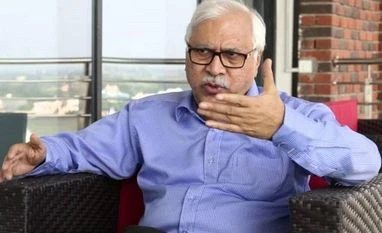
Former chief election commissioner S Y Quraishi will come out with a book next month which evaluates India's demographics from a religious perspective
 "Former CEC Quraishi seeks to bust population myth in new book")
WebinarsNew
Deep DiveNew
Explore Business Standard
Former chief election commissioner S Y Quraishi will come out with a book next month which evaluates India's demographics from a religious perspective
Former chief election commissioner S Y Quraishi will come out with a book next month which evaluates India's demographics from a religious perspective and seeks to bust the myth that Islam is against family planning.
"The Population Myth: Islam, Family Planning and Politics in India" is a detailed analysis of the 'Muslim rate of growth' in the light of population data and national and international reports, says publishers HarperCollins India.
It discusses how these myths have been often used to stoke majoritarian fears of a demographic skew. The author uses facts to demolish these and demonstrates how a planned population is in the interest of all communities.
The book, which will hit the bookshelves on February 15, delves into the Quran and the Hadith to show how Islam might have been one of the first religions in the world to actually advocate smaller families, which is why several Islamic nations today have population policies in place.
"Indians have been fed for decades the propaganda that Muslims produce too many children in order to overtake the Hindus, that this is how Muslims plan to capture political power," Quraishi argues.
"Derogatory slogans aimed at Muslims 'hum paanch, hamare pachchees' or 'hum chaar, hamare chalees' - have been voiced repeatedly at the top political level to strengthen this narrative. On the other hand, many Muslims also tend to believe that Islam is against family planning," he says.
"This book seeks to demolish these two myths, and many other misconceptions. It is essentially a multi-dimensional look at demographic, religious, administrative, policy and communication dimensions of an issue of foremost national concern - population," Quraishi, who joined the Indian Administrative Service in 1971 and rose to become the 17th CEC, says.
According to Swati Chopra, executive editor at HarperCollins India, the book examines the crucial and urgent question of the politicisation of demography in India.
"Are only certain communities responsible for the population explosion in the country? Or is it a 'myth' perpetuated for political gain? How can all communities, and ultimately the nation, benefit from population planning and how can it be effectively implemented?
"Quraishi examines these questions and bases his arguments on impeccable research, making the book a must-read for every Indian who is interested in the politics of our times," she says.
Quraishi, who was CEC from July 30, 2010 to June 10, 2012, introduced a number of electoral reforms, such as the creation of a voter education division, expenditure monitoring division, the India International Institute of Democracy and Election Management, and launched the National Voters Day.
(Only the headline and picture of this report may have been reworked by the Business Standard staff; the rest of the content is auto-generated from a syndicated feed.)
First Published: Jan 12 2021 | 5:04 PM IST


 Connect with us on WhatsApp