
Fortifying continues at Ghazipur; no further ban on internet: MHA official
Stringent security continued on Wednesday at Ghazipur on the Delhi-Uttar Pradesh border
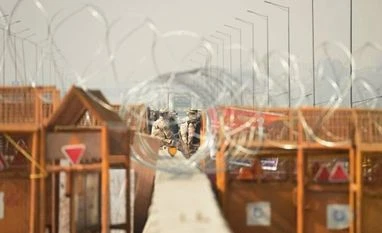 "Fortifying continues at Ghazipur; no further ban on internet: MHA official")
WebinarsNew
Deep DiveNew
Explore Business Standard
Stringent security continued on Wednesday at Ghazipur on the Delhi-Uttar Pradesh border
Stringent security continued on Wednesday at Ghazipur on the Delhi-Uttar Pradesh border, one of the key protest sites where thousands of farmers are camping with a demand that the Centre repeal the new agri-marketing laws enacted last September.
Internet services remained disrupted for the fifth day at the site on Delhi's outskirts where protesters are occupying a stretch of the Delhi-Meerut highway since November, even as a Ghaziabad Police officer told PTI that online connectivity has been restored but there could be glitches.
The Union Ministry of Home Affairs had announced suspension of internet services at the three border points of Singhu, Tikri and Ghazipur and their adjoining areas from 11 pm on January 29 effective till 11 pm on January 31.
Later it extended the suspension till 11 pm on February 2.
There has been no further extension of internet suspension at these sites as of now, a Home Ministry official said on Wednesday.
BKU's Meerut zone president Pawan Khatana said the internet was inaccessible at Ghazipur early on Wednesday till the time he left for a mahapanchayat in Haryana's Jind with union leader Rakesh Tikait and other supporters.
Ghaziabad Superintendent of Police (City 2) Gyanendra Singh told PTI, Internet services have been restored but there could be glitches or slow speed due to crowd at the protest site.
Iron nails studded on roads, multi-layer iron and concrete barricades, concertina wires remained fixed as large number of security personnel were deployed as fortification of Ghazipur continued to prevent protesters' movement to Delhi.
On the security apparatus at the protest sites, Delhi Police Commissioner S N Shrivastava had Tuesday told media, We have only strengthened the barricading so that it is not broken again.
Thousands of farmers have been protesting at the Delhi borders with Haryana and Uttar Pradesh, demanding a rollback of the Farmers' Produce Trade and Commerce (Promotion and Facilitation) Act, 2020; Farmers' (Empowerment and Protection) Agreement on Price Assurance and Farm Services Act, 2020; and the Essential Commodities (Amendment) Act, 2020.
The protesting farmers have expressed the apprehension that these laws would pave the way for the dismantling of the minimum support price (MSP) system, leaving them at the "mercy" of big corporations.
However, the government has maintained that the new laws will bring better opportunities to farmers and introduce new technologies in agriculture.
(Only the headline and picture of this report may have been reworked by the Business Standard staff; the rest of the content is auto-generated from a syndicated feed.)
First Published: Feb 03 2021 | 5:46 PM IST


