
HC declines to stay dearness allowances fixed by AAP govt for workmen
The Delhi HC declined to pass any interim order putting on hold the operation of an AAP government order with regard to dearness allowances (DA) to be paid to workmen
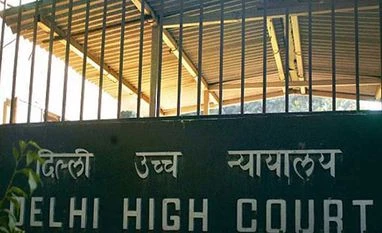 "HC declines to stay dearness allowances fixed by AAP govt for workmen")
WebinarsNew
Deep DiveNew
Explore Business Standard
The Delhi HC declined to pass any interim order putting on hold the operation of an AAP government order with regard to dearness allowances (DA) to be paid to workmen
The Delhi High Court on Wednesday declined to pass any interim order putting on hold the operation of an AAP government order with regard to dearness allowances (DA) to be paid to unskilled, semi-skilled and skilled workers in the national capital.
However, a bench of Chief Justice D N Patel and Justice Jyoti Singh which refused to stay, for now, the December 7, 2020 order of the Delhi government's labour department fixing the dearness allowances, observed that it was tough to survive in the national capital on a minimum wage of Rs 15,000.
The court issued notice to the Delhi government and its labour department and sought its stand on the application moved by the Apex Chamber of Commerce and Industry of NCT Delhi for stay of the December 7, 2020 order.
The application was filed in the main petition filed by the petitioner-organisation challenging an October 2019 notification issued by the Delhi government revising the minimum wages for all classes of workmen or employees.
The Delhi government, represented by its additional standing counsel Sanjoy Ghose and advocate Rishab Je, meanwhile has defended its October 2019 notification saying the rates were fixed based on the average prices of food items, clothing, housing, light and fuel, children's education, medical treatments and other factors.
The Delhi government, in an affidavit, has said that before fixing the minimum wages, the Delhi Minimum Wages Advisory Board was set up and it comprised all stakeholders including the petitioners and it had held several rounds of meetings, deliberations and discussions.
As no consensus was formed after the discussions, the matter was put to vote and the rates were approved by majority of members of the Board, the affidavit has said.
The petitioner organisation, which claims to represent interests of around 50,000 Micro, Small and Medium Enterprises (MSMEs) in the national capital, has contended that the December 7, 2020 order of the Additional Labour Commissioner, Labour Department, was "ex facie erroneous" as the DA has been determined with retrospective effect from April 1, 2020 and October 1, 2020.
"It is submitted that the impugned order dated December 7, 2020 cannot be issued retrospectively," the organisation has said in its application.
(Only the headline and picture of this report may have been reworked by the Business Standard staff; the rest of the content is auto-generated from a syndicated feed.)
First Published: Feb 10 2021 | 7:47 PM IST


 Connect with us on WhatsApp