Heart of the Aarey crisis lies in the row over definition of 'forest'

Activists hope Aarey case changes norms at a time of global climate protests
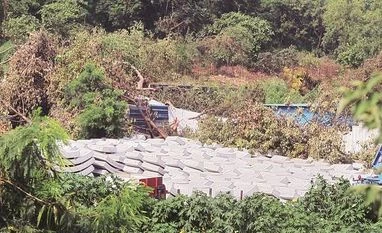
Construction site of the Metro train parking shed at Aarey Colony. ( Photo: PTI)
Geetika Srivastava
3 min read Last Updated : Oct 09 2019 | 8:29 PM IST
One would imagine that an area of about 33 rugby stadiums with nearly 3,000 trees would be easy to classify as a forest — but it’s not so easy under the laws of the land.

This was the bone of contention in the Aarey Colony case — is the green cover in Mumbai a forest or not? On October 4, the Bombay High Court (HC) refused to declare it a forest and declined to squash the Mumbai Municipal Corporation’s decision to fell 2,600 trees to set up a metro car shed. By the time the Supreme Court stepped in this Monday to stay the felling of trees, quite a few had been chopped down.

India has long struggled to find a suitable definition of a forest. The Bombay HC, in its judgment, noted that Maharashtra had not laid out clear parameters. This was different from neighbouring Gujarat, where 2 hectares of continuous land with 50 per cent coverage would qualify as forest land.

“As there is no clarity, governments have misused the law time and again,” said advocate Zaman Ali, who represents non-government organisation Vanashakti, one of the petitioners in the case.

Other lawyers also shared the opinion. “A lot of stuff falls in grey areas of fuzzy logic,” said Sanjay Hegde, a Supreme Court lawyer representing another petitioner.

Declaring a forest is no simple act — every matter has to be decided on a case-to-case basis. Once an area has been declared a forest, it attracts provisions of the Forest Conservation Act, 1980, aimed at protecting the environment. According to the Act, no “non-forest” activity can take place in the area without government approval.

In 1996, the Supreme Court tried to clarify the term in the famous T N Godavarman case.

The meaning, it said, included the term “forest” as understood in the dictionary sense, and also any area recorded as such in the government record, irrespective of ownership. It laid the onus of defining the term specifically — with certain parameters — with each state, ordering them to constitute an expert committee.

Twenty-three years later, many states, including Maharashtara, Bihar, Haryana, and Jharkhand, still have not come up with a clear definition.

In the Aarey case, the matter is more difficult as it is an urban forest.

“In the case of urban forests, where the entity is not defined as a sanctuary or a national park, where there is a fantastic green cover, you’re pitted against giant corporate entities, development organisations, and government bodies. This case has made us realise the mess that exists in the system,” said Sudhir Mishra, Supreme Court advocate and co-founder, Trust Legal.

At a time when the environment and climate change have captured global attention with Swedish school student Greta Thunberg leading millions to protest, activists in India also hope that the Aarey case brings about some changes.

M C Mehta, one of India’s most prominent environment activists and public interest lawyers, said, “The Aarey case is a matter of absolute insensitivity and callousness towards the green lungs of Mumbai. The political leadership is living in a vacuum regarding environmental pollution.”

Even though the case in the Bombay High Court did not delve into merits, all hopes are now pinned on the Supreme Court’s judgment on the several petitions filed on the issue.

One subscription. Two world-class reads.

Already subscribed? Log in

Subscribe to read the full story →
*Subscribe to Business Standard digital and get complimentary access to The New York Times

Smart Quarterly

₹900

3 Months

₹300/Month

SAVE 25%

Smart Essential

₹2,700

1 Year

₹225/Month

SAVE 46%
*Complimentary New York Times access for the 2nd year will be given after 12 months

Super Saver

₹3,900

2 Years

₹162/Month

Subscribe

Renews automatically, cancel anytime

Here’s what’s included in our digital subscription plans

Exclusive premium stories online

  • Over 30 premium stories daily, handpicked by our editors

Complimentary Access to The New York Times

  • News, Games, Cooking, Audio, Wirecutter & The Athletic

Business Standard Epaper

  • Digital replica of our daily newspaper — with options to read, save, and share

Curated Newsletters

  • Insights on markets, finance, politics, tech, and more delivered to your inbox

Market Analysis & Investment Insights

  • In-depth market analysis & insights with access to The Smart Investor

Archives

  • Repository of articles and publications dating back to 1997

Ad-free Reading

  • Uninterrupted reading experience with no advertisements

Seamless Access Across All Devices

  • Access Business Standard across devices — mobile, tablet, or PC, via web or app

Topics :Mumbai MetroforestDeforestation

Next Story


