IIT Madras-backed start-up develops textiles that can zap Corona in 5 mins

Up go 99.00 per cent of the pathogen can be deactivated using textiles coated with nano particles
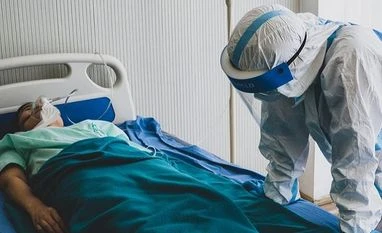
IIT Madras-backed start-up develops textiles that can zap Corona in 5 mins
The nanocoating offers substantially enhanced protection and is clinically proven to eliminate as much as 99.99 per cent of coronavirus.
T E Narasimhan Chennai
3 min read Last Updated : Aug 31 2020 | 5:21 PM IST
Muse Nanobots, a subsidiary of Muse Wearables founded by IIT Madras Alumni and supported by the institute's incubation cell, has developed a nanotech-coating on textiles that can deactivate coronavirus within five minutes of contact.

Muse nano-coated textiles offers enhanced protection to travelling people and to frontline healthcare, hospital, hotels and restaurant workers, the company claims.

Muse Nanobots conducted a study with the US-based Situ Biosciences, an independent product test laboratory in Chicago that specialises in providing microbial product testing.

The study, conducted to gauge the effectiveness of Muse Nanobots antiviral coating on coronavirus 229E, showed that it inactivated 99.99 per cent of the pathogen within five minutes of contact. The study was conducted in accordance with international standards for determining antiviral activity of textile products, according to a press release.

Sai Prasanth, co-founder of Muse Nanobots said, “We are one of the first Indian technology companies to prove, via clinical testing and validation, the coating efficacy of our product on coronavirus. Muse Nanobots coating has also displayed strong anti-bacterial activity on human pathogenic bacteria such as Escherichia coli and Staphylococcus aureus. The coating makes the textile surface self-sanitising and provides a germ-resistant surface.”


Prasanth said this shows that Muse Nanocoat on textiles can become an added layer of protection in the fight against the pandemic. 

Muse Nanobots coating can be applied on any kind of fabric and can be coated on masks, PPE kits, clothes and packaging material. The test also has shown that it is non-toxic to human cells and is comfortable to use.

Prasanth said the nanocoating offers substantially enhanced protection and is clinically proven to eliminate as much as 99.99 per cent of coronavirus. However, there are other ways in which Covid-19 can spread, such as while shaking hands with others or through droplets/coughs, so users should adhere to social distancing and follow the norms to protect themselves.

The start-up aims to install its nanocoating machines in about 15 Indian textile vompanies that make regular office and casual attire, sportswear, PPEs, decor (curtains, bedsheets) and packaging material by end of 2020.

Gautam Reddy, CEO, Muse Nanobots sais the nanocoating machine can coat fabrics at an industrial production scale and can be integrated with existing textile production facilities. 

No changes in the textile fabrics have been observed after the coating process, which makes this relevant for various applications such as office wear, school uniforms, medical wear, sportswear and wearables. The coating lasts up to 60 washes when washed under 70 degrees Celsius. The coated chemicals do not show any leaching of chemicals, Reddy added.

Apart from direct installations at partner locations, Muse Nanobots also has a coating facility in Bengaluru where textile companies can send their fabrics to be treated with antiviral coating. The start=up plans to set up three more facilities in different cities to cater to the demand and achieve faster turnaround time by September-end. Muse Nanobots face masks will be available in the market by the first week of September on e-commerce platforms and Muse Nanobots website.

Highlights of nanoparticle-coated textiles: 

* Anti-microbial properties: The clothes continuously capture and destroy viruses and other microbes upon contact. Other viruses as small as 30 nanometres can also be deactivated permanently.
* The textiles do not leach while washing in water and are environment-friendly.
" At present the particles can be coated on material like cotton, polyester and cotton–polyester
* They are non-toxic and can be safely used for making masks and other PPEs

One subscription. Two world-class reads.

Already subscribed? Log in

Subscribe to read the full story →
*Subscribe to Business Standard digital and get complimentary access to The New York Times

Smart Quarterly

₹900

3 Months

₹300/Month

SAVE 25%

Smart Essential

₹2,700

1 Year

₹225/Month

SAVE 46%
*Complimentary New York Times access for the 2nd year will be given after 12 months

Super Saver

₹3,900

2 Years

₹162/Month

Subscribe

Renews automatically, cancel anytime

Here’s what’s included in our digital subscription plans

Exclusive premium stories online

  • Over 30 premium stories daily, handpicked by our editors

Complimentary Access to The New York Times

  • News, Games, Cooking, Audio, Wirecutter & The Athletic

Business Standard Epaper

  • Digital replica of our daily newspaper — with options to read, save, and share

Curated Newsletters

  • Insights on markets, finance, politics, tech, and more delivered to your inbox

Market Analysis & Investment Insights

  • In-depth market analysis & insights with access to The Smart Investor

Archives

  • Repository of articles and publications dating back to 1997

Ad-free Reading

  • Uninterrupted reading experience with no advertisements

Seamless Access Across All Devices

  • Access Business Standard across devices — mobile, tablet, or PC, via web or app

Topics :CoronavirusIIT MadrasCoronavirus Tests

Next Story



