In a first, SC orders BSNL to shut mobile tower over cancer patient's plea

Development comes despite repeated claims by the Centre that no such health hazard exists
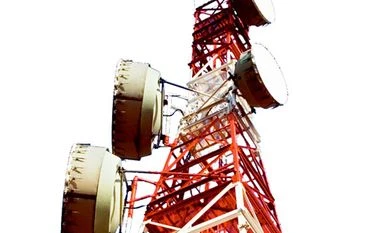
tower
BS Web Team New Delhi
Last Updated : Apr 12 2017 | 12:29 PM IST
In a first, the Supreme court has ordered that a BSNL mobile phone tower in Gwalior shut down on the plea of a 42-year old cancer patient, reported ET Telecom on Wednesday.

This the first time that a mobile tower has been ordered to be deactivated on the grounds that the electromagnetic radiation emanating from it has caused cancer in an individual, the report added.  

Harish Chand Tiwari, a domestic help who had been working in Gwalior's Dal Baazar area, had moved the apex court last year, complaining that a BSNL mobile phone tower, which was installed on the roof of the house neighbouring the one he worked in, had exposed him to constant harmful electromagnetic radiation for the past 14 years. 

According to the report, Tiwari claimed before the apex court that the tower, which was illegally installed in the residential area in 2002 and was situated less than 20 metre from the house where he worked, was the cause behind his Hodgkin's Lymphoma. 

The order by a bench of Justices Ranjan Gogoi and Navin Sinha said: "We direct that the particular mobile tower operated by BSNL in the area mentioned in the petition filed by Harish Chand Tiwari, shall be deactivated by the BSNL within seven days from today."

The development comes as the long-standing debate about the health hazards associated with cell towers continues. 

Furthermore, as reported earlier, India's safety factor in such matters is 10 times stiffer than in 90 per cent countries that follow standards set by the International Commission on Non-ionising Radiation Protection. In September 2012, the Department of Telecom had reduced the permissible radiation limits for tower firms to 10 times lower than recommended by World Health Organization. It had also asked the operators to maintain a certain distance from a building, depending on the number of antennae they want to install. (Read more

In fact, even as activists and concerned citizens continue to raise their voices against what they fear to be a health hazard, the central government in October last year had submitted in front of the apex court that there was no proof that radiation from cell towers had adverse health effects. 

Also, in 2015, the Cellular Operators' Association of India (COAI) had also said that radiation from cell towers did not cause cancer.
 
As reported earlier, in a letter to Rajasthan legislator Ram Lal Sharma, who had raised a question in the state Assembly on the link between cancer and people living within 100 metres of mobile towers, the COAI said there were no such adverse health consequences.

One subscription. Two world-class reads.

Already subscribed? Log in

Subscribe to read the full story →
*Subscribe to Business Standard digital and get complimentary access to The New York Times

Smart Quarterly

₹900

3 Months

₹300/Month

SAVE 25%

Smart Essential

₹2,700

1 Year

₹225/Month

SAVE 46%
*Complimentary New York Times access for the 2nd year will be given after 12 months

Super Saver

₹3,900

2 Years

₹162/Month

Subscribe

Renews automatically, cancel anytime

Here’s what’s included in our digital subscription plans

Exclusive premium stories online

  • Over 30 premium stories daily, handpicked by our editors

Complimentary Access to The New York Times

  • News, Games, Cooking, Audio, Wirecutter & The Athletic

Business Standard Epaper

  • Digital replica of our daily newspaper — with options to read, save, and share

Curated Newsletters

  • Insights on markets, finance, politics, tech, and more delivered to your inbox

Market Analysis & Investment Insights

  • In-depth market analysis & insights with access to The Smart Investor

Archives

  • Repository of articles and publications dating back to 1997

Ad-free Reading

  • Uninterrupted reading experience with no advertisements

Seamless Access Across All Devices

  • Access Business Standard across devices — mobile, tablet, or PC, via web or app

Next Story



