“When India came under the control of Britain, it was a case of a country without machines being overpowered by one which had them. To discard machines, go about half-naked, live half-starved and reside in rude huts, would never lift us to the heights of happiness and freedom, but rather plunge us into the depths of misery and degradation. I, therefore, resolved to concentrate on the sound management of our enterprise, build more and still better machines, create more jobs and leave politics to our politicians. I would serve my country and lift her out of poverty and bondage, in the manner, which to me, seemed wisest, best, most efficacious, and most efficient.”
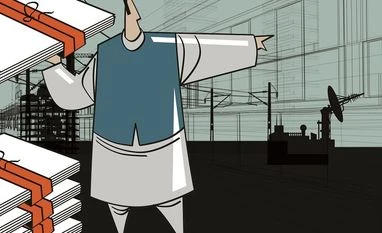
Thus wrote S L Kirloskar, one of India’s most celebrated entrepreneurs and progressive industrialists, in his autobiography, Cactus and Roses, making no bones about his relationship, or the lack of it, with Mahatma Gandhi and Gandhism and the politics of the day. But the fact is that the relationship between business and politics, however much they might deny it, has been symbiotic for both businessmen and politicians.
T T Krishnamachari presented the second Budget of the Indian republic in May 1956. The Budget put rigorous restrictions on imports through an import licensing system. The effect of the Budget was: if your business needed imported goods, you needed to know politicians who would direct bureaucrats to interpret licensing rules suitably to enable you to go on manufacturing. In return, funding for political causes or personal enrichment was common.
The tradition endured. There are both sublime and ridiculous examples.
In the last United Progressive Alliance (UPA) government, the wife of a senior minister, who was said to be a model of rectitude, produced a bunch of paintings of dubious artistic merit. These were then forced upon various agencies which were building new airport terminals and civil aviation installations for staggering sums of money. It is not clear how the money was used. There was certainly no change in the lifestyle of the minister or his family. So it could only have gone to the party.
It was V P Singh who first created waves in this dynamics by using political power to change the rules. In May 1985, Singh suddenly stopped the import of purified terephthalic acid (PTA) from the open general licence (OGL) category. As a raw material, this was very important in the manufacture of polyester filament yarn. Worst hit by this move was the Reliance group. Reliance was able to secure, from various financial institutions, letters of credit that would allow it to import almost one full year’s requirement of PTA on the eve of the issuance of the government notification.
Singh did not stop there. In 1990, government-owned financial institutions like the Life Insurance Corporation of India and General Insurance Corporation stonewalled attempts by the Reliance group to acquire managerial control of Larsen & Toubro (L&T). Sensing defeat, the Ambanis resigned from the board of the company. Dhirubhai, who had become L&T’s chairman in April 1989, had to quit his post to make way for D N Ghosh, former chairman of the State Bank of India. V P Singh was shifted to the defence ministry. He later resigned. The rest is history.
In India, judicial systems are slow and political influence and connections remain critical for such basics as land acquisition, water connections, licences and permits. In West Bengal, for instance, it became clear that the success of Tata Motors’ Nano project hinged heavily on huge discounts on power tariffs and local imposts and on low-priced loans from the state government.
Narendra Modi replicated many of West Bengal’s concessions to attract the Nano project to Gujarat. Satyam founder Ramalinga Raju’s alleged political links facilitated the rise and rise of his group and family. The worms came wriggling out when the political dispensation changed.
In 2015, Prime Minister Modi told a group of businessmen: “You earn your money by taking risks: you’re not like those who draw a salary and go home to safe existence. Why has our appetite for risk-taking diminished?” Given the current low in growth of manufacturing and lethargy of industry, maybe industry could ask the government the same question.

 "India@70: The symbiotic relationship between business & politics")












 Connect with us on WhatsApp