India Coronavirus Dispatch: Daily Covid tests dip below one million

Vaccine officials told to get set for rollout by Dec 25, how scientific research has suffered amid virus, loose ends of clinical trial machinery-news relevant to India's fight against Covid-19

Coronavirus, covid, tests
Mumbai has been one of India’s worst-hit cities, with positivity rates going as high as 20 per cent in the first six months of the pandemic
Bharath Manjesh New Delhi
4 min read Last Updated : Dec 11 2020 | 2:56 PM IST
India’s daily tests dip below one million 

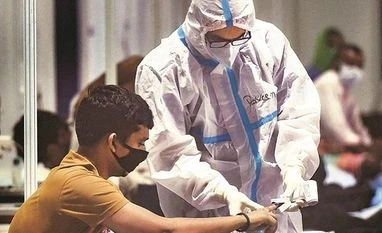
The number of Covid-19 tests conducted across the country, in the last 24 hours, reduced to less than one million Thursday. This led to the test positivity rate edging up slightly. Kerala on the other hand is seeing an increase in its active case numbers, which is already the second-highest in the country. Read more here

Officials told to gear up infrastructure, systems for Covid vaccine rollout by Dec 25

Vaccinators across India have been told to be prepared for the countrywide Covid-19 vaccination drive by December 25, according to this report. 

During a two-day-long virtual workshop on “training of trainers”, vaccination officers from all states and core Coronavirus teams were told to keep essential infrastructure and manpower ready by this date.

The immunisation will be staggered, starting with health workers, followed by other frontline workers. All of them are to be pre-registered. The inoculation will be given at designated centres by trained vaccinators on scheduled days. These centres will be guarded at all times. Read more here

With 5% or less positivity rate, Mumbai could finally be surfacing from Covid nightmare

In the past week, Mumbai, which has been one of the most severely affected cities, has been reporting a test positivity rate of five per cent or lower. This indicates that the disease could be on the decline in the financial capital. 

Over the past two weeks, the number of new cases per day has almost halved to around 750 from over 1,200, with the number of active cases being contained at about 12,000.

Mumbai has been one of India’s worst-hit cities, with positivity rates going as high as 20 per cent in the first six months of the pandemic. However, serological surveys indicated that a large percentage of both the city’s slum and non-slum population has already developed Covid antibodies. Read more here

Scientists explain how the Covid-19 pandemic has hurt crucial research projects

What do you do when Covid-19 safety protocols and travel restrictions mean you cannot do your research? That is what these three scientists have had to figure out this year, as the global pandemic has kept them from their fieldwork.

A microbiologist describes the frustration of missing a sampling season in the Arctic at a time when climate change means the permafrost is an endangered resource. A biologist writes about missing for the first time the annual census of a bird population she has been studying for 35 years and the hole that leaves in her data. And natural events are not the only ones researchers are forced to skip. An environmental scientist explains how postponing a global gathering about climate change could have long-term effects for people like her who study the process – as well as for the planet. Read more here

Serum Institute fracas exposes loose ends of India’s clinical trial machinery

Last month, two leading Indian Covid-19 vaccine makers, Bharat Biotech and Serum Institute of India (SII), found themselves embroiled in controversy. Media reports alleged that there had been a “serious adverse event” in phase 1 of Bharat Biotech’s clinical trials for Covaxin. Both firms confirmed that serious adverse events (SAEs) had occurred. But, what are "serious adverse events" and what happens when they occur? Read more here

Molnupiravir, a drug shown to stop Covid-19 spread in 24 hours

A new drug called Molnupiravir has been shown to stop the transmission of coronavirus in a day. Results of the research by scientists at the Institute of Biomedical Sciences, Georgia State University, have been published in the journal Nature Microbiology. And Indian researchers plan to apply to the drug regulator to conduct human trials with the drug. Read more here

One subscription. Two world-class reads.

Already subscribed? Log in

Subscribe to read the full story →
*Subscribe to Business Standard digital and get complimentary access to The New York Times

Smart Quarterly

₹900

3 Months

₹300/Month

SAVE 25%

Smart Essential

₹2,700

1 Year

₹225/Month

SAVE 46%
*Complimentary New York Times access for the 2nd year will be given after 12 months

Super Saver

₹3,900

2 Years

₹162/Month

Subscribe

Renews automatically, cancel anytime

Here’s what’s included in our digital subscription plans

Exclusive premium stories online

  • Over 30 premium stories daily, handpicked by our editors

Complimentary Access to The New York Times

  • News, Games, Cooking, Audio, Wirecutter & The Athletic

Business Standard Epaper

  • Digital replica of our daily newspaper — with options to read, save, and share

Curated Newsletters

  • Insights on markets, finance, politics, tech, and more delivered to your inbox

Market Analysis & Investment Insights

  • In-depth market analysis & insights with access to The Smart Investor

Archives

  • Repository of articles and publications dating back to 1997

Ad-free Reading

  • Uninterrupted reading experience with no advertisements

Seamless Access Across All Devices

  • Access Business Standard across devices — mobile, tablet, or PC, via web or app

Topics :CoronavirusCoronavirus VaccineCoronavirus Tests

Next Story




