India's only quinine making unit set up in 1874, has been shut since 2001

Covid-19 has triggered a sense of urgency to revive this sick unit, as Hydroxychloroquine, an anti-malarial drug, surfaced as potential medicine to alleviate the symptoms of the disease

HCQ factory
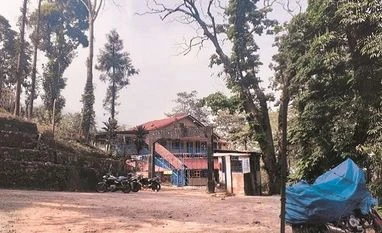
Perched in the hills of Darjeeling, the factory was set up in 1874, but has remained shut since 2001
Namrata Acharya Kolkata
5 min read Last Updated : Apr 13 2020 | 11:32 PM IST
Udena Amgmu Yonzome holds one of the rarest jobs in India. She is the only official quinologist, or expert in making the age-old anti-malarial medicine, quinine, derived from the bark of the Cinchona plant. In February 2020, Yonzome joined the government factory for processing quinine at Mungpoo in Darjeeling, as an Assistant Quinologist, a position created in the late 19th century in colonial India. The factory is the only of its kind in India. The appointment process of a Quinologist is at the final stages.

Perched in the hills of Darjeeling, the factory was set up in the year 1874, but has been shut since 2001 as it failed to secure the Good Manufacturing Practices (GMP) tag needed for producing pharmaceutical products in India. The last Quinologist retired in 2012.

Covid-19 has triggered a sense of urgency to revive this sick unit from the colonial era, as Hydroxychloroquine (HCQ), an anti-malarial drug similar to chloroquine (a synthetic form of quinine), surfaced as potential medicine to alleviate the symptoms of the disease. HCQ is less toxic and improved version of chloroquine.


However, much before the Covid-19 pandemic, the government of West Bengal had already begun reviving the quinine factory, although there were doubts about its ability to achive scale in the face of HCQ’s proven efficacy to treat malaria with minimal side effects.

In fact, when West Bengal government advertised the position of a Quinilogist and Assistant Quinologist in 2018 for factory at Mungpoo, the number of applicants was so low that the entrance exam had to be skipped and the recruitment happened through direct interview.

However, for the past one month, the scenario has changed. Efforts to reopen the colonial-era establishment have been made in a war footing and government of West Bengal too has been working hard towards it, says Samuel Rai, director of cinchona and other medicinal plants, West Bengal.  


In fact, Mungpoo is the only major site of cinchona plantation in India, apart from small-scale production in the Nilgiri hills of southern India. Every year Mungpoo produces about 200,000 kg of cinchona bark, which pharmaceutical companies in Gujarat and Maharashtra buy for medicines that primarily alleviate conditions like leg cramps in certain diseases.

“Before Covid-19, there waasn't much demand for quinine. It had been stagnant. Now we are getting some queries from Madhya Pradesh and UP. Thousands of labourers will also be benefitted if the demand goes up. We are hopeful and are working on a war footing,” says Rai.

Cinchona plantations in Darjeeling are spread over 3,400 acres, with about 100 acres added every year. Some 5,000 plantation workers and 400 support staff are directly associated with the plantations in the region.

The plantations have an illustrious history too.

Cinchona plants originally belonged to South America, and were brought to India by the British and by the Dutch to the present day Indonesia. However, the decline of Indian quinine started in  the early twentieth century, as the Indonesian variety was superior, says Rohan Deb Roy, Lecturer in South Asian History, University of Reading, UK, who has specialised in the field of colonial medicines.

German scientists discovered a synthetic alternative to quinine, called chloroquine in the 1930s andm eventually its improved version HCQ, as an antimalarial drug. This made the botanical raw material of cinchona redundant, leading to the decline of the quinine industry in Darjeeling. However, for long, quinine was seen as a colonial solution to  malaria, the disease of the developing world.


“In the nineteenth and early twentieth centuries, malaria was predominantly associated with tropical colonies ruled by European powers. In imperial propaganda, quinine was highlighted as an example of how colonial rule benefited the colonised. Even after the end of colonial rule, malaria is seen to be feature of the so-called ‘developing’ and ‘underdeveloped’ world. In contrast, the Covid-19 pandemic seems to have affected much of the world. The pandemic has exposed the fragility of the ‘austere’ public health system and the economy of the US, the UK and the European countries,” says Roy.

While the prospects of reviving the quinine factory look exciting, doctors are yet to give their verdict on whether quinine can be a substitute of HCQ, which itself is in experimental stage to treat Covid 19.

“Quinine was once a very effective medicine and especially for treatment of obstinate forms of malaria. However, quinine was found to have many side effects and after better alternatives were found, it was no longer used to treat malaria. For Covid 19 we are to find a conclusive medicine and there is no evidence that quinine will be useful,” says Arindam Biswas, consultant, department of general medicine in a private hospital.

 Even though there are question marks on the place of quinine in the modern pharmaceutical industry, Yanzome and Rai are betting on its high potent for revival.

“Quinine being the organic form, it is always more potent,” says Yanzome. Rai too agrees with her.

While the world scrambles to find a medicine for Covid 19, the small village of Mungpoo is pining hopes on quinine as a magic drug to fight the pandemic.

One subscription. Two world-class reads.

Already subscribed? Log in

Subscribe to read the full story →
*Subscribe to Business Standard digital and get complimentary access to The New York Times

Smart Quarterly

₹900

3 Months

₹300/Month

SAVE 25%

Smart Essential

₹2,700

1 Year

₹225/Month

SAVE 46%
*Complimentary New York Times access for the 2nd year will be given after 12 months

Super Saver

₹3,900

2 Years

₹162/Month

Subscribe

Renews automatically, cancel anytime

Here’s what’s included in our digital subscription plans

Exclusive premium stories online

  • Over 30 premium stories daily, handpicked by our editors

Complimentary Access to The New York Times

  • News, Games, Cooking, Audio, Wirecutter & The Athletic

Business Standard Epaper

  • Digital replica of our daily newspaper — with options to read, save, and share

Curated Newsletters

  • Insights on markets, finance, politics, tech, and more delivered to your inbox

Market Analysis & Investment Insights

  • In-depth market analysis & insights with access to The Smart Investor

Archives

  • Repository of articles and publications dating back to 1997

Ad-free Reading

  • Uninterrupted reading experience with no advertisements

Seamless Access Across All Devices

  • Access Business Standard across devices — mobile, tablet, or PC, via web or app

Topics :CoronavirusHydroxychloroquineMalaria vaccineMalariapharmacypharmaceutical firmsDrug makers in IndiaWest Bengal government

Next Story




