
India's R&D spending is up but least among all BRICS nations
As much as 81.3% of R&D expenditure incurred by central government sources came from just eight major scientific agencies
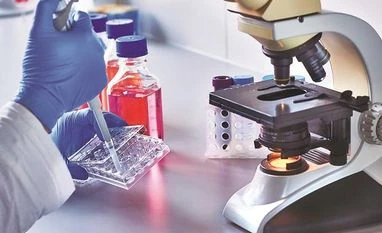 "India's R&D spending is up but least among all BRICS nations")
premium
WebinarsNew
Deep DiveNew
Explore Business Standard
As much as 81.3% of R&D expenditure incurred by central government sources came from just eight major scientific agencies
A national survey on the status of research and development in the country has shown that India’s gross expenditure on R&D (GERD) has more than tripled from Rs 2411.17 billion (Rs 24,117 crore) to Rs 853.26 (Rs 85,326 crore) in the decade from 2004-2005 to 2014-2015. It has also been estimated that it could have gone up to Rs 945.16 billion (Rs 94,516 crore) in 2015-2016 and crossed the Rs one trillion (Rs 1 lakh crore) mark in 2016-2017.
The survey, conducted by the National Science and Technology Management Information System (NSTMIS) under the Department of Science and Technology (DST), has also shown that the per capita R&D expenditure increased to Rs 659 in 2014-2015 from Rs 217 in 2004-2005. It concluded that the GERD growth was driven mainly by the government. The central government accounted for 45.1%, state governments for 7.4%, public sector industries for 5.5% and institutions of higher education for 3.9%. Private industry accounted for the remaining 38.1%.
Significantly, the share of business enterprises – from both the public and private sectors – has been on the rise. Their share of 43.6% in 2014-2015 was found to be fairly higher than the situation just five years prior: in 2009-2010, their share was just 34.2 %. The study also revealed that public sector R&D was led by defence-related and the fuel industries, while private-sector R&D was dominated by drug/pharmaceuticals and transportation.
The survey compared the levels of participation of the government, business enterprises and institutions of higher education in R&D in India with those in 13 other countries: Australia, Canada, China, France, Germany, Italy, Japan, Mexico, Russia, South Korea, Spain, the UK and the US.
The government’s contribution in India sticks out when compared to these economies. According to the survey, the India government had the largest share of national GERD. On the flip side, the country hit the bottom in the ‘participation of higher education institutions’ bracket. Government participation in R&D in the other countries ranged from 7% in the UK to 38 % in Mexico, against India’s 55%. In contrast, the share of institutions of higher education in R&D varied from 7% cent in China to 40% in Canada, against India’s feeble 4%.
Further, as much as 81.3% of R&D expenditure incurred by central government sources came from just eight major scientific agencies in 2014:
Women’s participation in extramural R&D projects has increased significantly – from 13% in 2000-2001 to 29% in 2014-2015. In absolute numbers, 1,301 women principal investigators had availed extramural R&D support during 2014-2015 as against just 232 in 2000-2001. In terms of personnel directly engaged in R&D activities, there were 39,388 women (13.9%) on April 1, 2015, out of a total of 282,000 (2.82 lakh).
The NSTMIS also found that of the 27,327 doctorates awarded in the country in 2014, 15,246 (56.4%) were from science and technology disciplines. In the same year, India awarded the third-most number of S&T PhDs, after China (30,017) and the US (26,520).
The number of researchers per million people in India has more than doubled, from 110 in 2000 to 218 in 2015. India’s R&D expenditure per researcher was Rs 1,78,000 in terms of the purchase parity price on a dollar basis. This was higher than that of Russia, Canada, Israel, Hungary, Spain and the UK.
The extramural R&D support by central government agencies increased from Rs 13.58 billion (Rs 1,358 crore) in 2009-2010 to Rs 20.02 billion (Rs 2,002 crore) in 2014-2015. Its share in the national gross expenditure on R&D was 2.3% during 2014-2015. The DST and the DBT were the two major players, contributing nearly 66.4% of the extramural R&D support in the country. The academic sector received 58% during 2014-2015.
India spent 0.69% of its GDP on R&D in 2014-2015, Brazil, Russia, China and South Africa (the other members of the BRICS group) spent 1.24%, 1.19%, 2.05% and 0.73% respectively. The fraction was less than 0.5% for Pakistan and Sri Lanka, at 0.29% and 0.1% respectively.
The number of scientific publications has been on the rise. According to the SCOPUS database, India’s research output increased from 62,955 papers in 2009 to 106,065 papers in 2013. According to the Science Citation Index (SCI) database, Indian researchers published 39,672 papers in 2009 and 52,165 papers in 2015.
Per an NSTMIS analysis, the SCOPUS and SCI growth rates of publications stand at 13.9% and 7.1% for the period 2009-2013 against the global average of 4.4% and 4.1%, respectively. Further, according to the SCI, India’s share in global research publications increased from 2.2% in 2000 to 3.7% in 2013; according to SCOPUS, it went from 3.1% in 2009 to 4.4% in 2013. SCOPUS also ranked India sixth in the world in the number of scientific publications, ahead of France, Spain, and Italy during 2013.
Already subscribed? Log in
Subscribe to read the full story →

3 Months
₹300/Month
1 Year
₹225/Month
2 Years
₹162/Month
Renews automatically, cancel anytime

Premium stories handpicked daily by our editors


News, Games, Cooking, Audio, Wirecutter & The Athletic
Digital replica of our daily newspaper — with options to read, save, and share


Insights on markets, finance, politics, tech, and more delivered to your inbox
In-depth market analysis & insights with access to The Smart Investor


Repository of articles and publications dating back to 1997
Uninterrupted reading experience with no advertisements


Access Business Standard across devices — mobile, tablet, or PC, via web or app
First Published: Jan 16 2018 | 9:45 AM IST


 Connect with us on WhatsApp