
India should review electoral system, implement 'right to reject': Ex-CEC
According to this concept, if a certain percentage of electors cast their vote to reject all the candidates
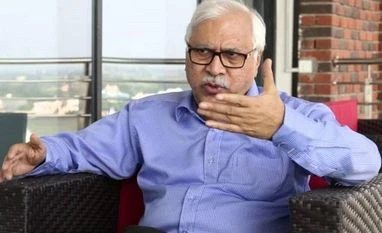 "India should review electoral system, implement 'right to reject': Ex-CEC")
WebinarsNew
Deep DiveNew
Explore Business Standard
According to this concept, if a certain percentage of electors cast their vote to reject all the candidates
It's high time India reviewed its first-past-the-post (FPTP) electoral system that is increasingly emerging as flawed and imperfect, former Chief Election Commissioner S Y Quraishi has said.
"Till a few years back, I would defend the FPTP as a simple, practical system that has stood the test of time. But after the 2014 elections, I had to change my position. Why? Because in 2104 the party which got the third-largest vote-share got zero seats. That is the BSP (Bahujan Samaj Party)," Quraishi told IANS in an interview.
"Around 20 per cent of the Uttar Pradesh voters voted for the BSP, but they could not elect an MP. Now, this is very unfair to those 20 per cent voters, besides the party. The voters feel cheated. This is surely a flaw in the system," he said.
He said that the system is also being debated in Britain -- from where India adopted it.
"The British parliament is discussing the FPTP yet again. In India, too, a Parliamentary Standing Committee is already examining the issue and has written to all parties to give their views. So I think time has come for us to look at an alternative system," the former CEC said.
What other options do we have then?
"I strongly suggest that we can follow the German model of a mixed system, albeit with some modification. In Germany, every voter casts two votes -- one for a candidate in his constituency and the other for a party.
"So if a party gets, say, 15 per cent votes, this percentage is adjusted over the entire parliament. But it is a little complicated. I say the Nepal model is simpler. Some seats are filled through direct election, some are given to parties," he said.
In Nepal, voters are given two separate ballot papers for the FPTP and proportional representation. Of the 275 members in the Lower House of Nepal's bicameral parliament, 165 members are elected through the FPTP system and 110 through the proportional representation system.
"But unlike the German system, the results of the seats following the proportional representation are allotted only in proportion to those seats, and not in proportion to the entire 275 seats. Therefore, the results in one election have little or no impact on the results of the other," Quraishi said.
"Suppose BSP has got 20 per cent votes but won zero seats. But in the new model, it will still have certain seats in Parliament through the party quota and the voters who voted for that party will get some representation," Quraishi explained.
However, he said, this model would require either dividing our parliamentary seats going for direct election to half -- while keeping the other half for proportional representation -- or doubling them.
Quraishi also dismissed the idea of "right to recall" -- where the voters can recall an elected candidate for non-performance or corruption etc -- as being "impossible" in the Indian context.
"The chances of manipulation of this right by vested interests are very high. A person with vested interests can come up with lakhs of signatures, many of them bogus, to claim that people want to recall a candidate. Now, there is no way you can verify lakhs of those signatures for their authenticity. Also, in India it is not easy to conduct elections. We cannot afford to have election after election in so many constituencies," he said.
"Anna Hazare and his team had come to me at the height of their movement to discuss this idea, and after discussing it with me they accepted that it was not practical," Quraishi said.
However, he said that "right to reject" can be implemented.
According to this concept, if a certain percentage of electors cast their vote to reject all the candidates (NOTA in the Indian context), then the election will be void and all parties will have to field a new candidate for re-election.
The None of the Above (NOTA) option, Quraishi said, is a step towards "right to reject".
First Published: Sep 21 2017 | 1:20 PM IST


 Connect with us on WhatsApp