India stresses on multilateral action for extradition of economic offenders
Singh said that corruption is a complex social, political, and economic challenge affecting all countries and in a globalised world, corruption has ramifications well beyond the G20
IANS New Delhi India on Wednesday called upon the G-20 nations to adopt multilateral action for faster extradition of fugitive economic offenders and recovery of assets both on the domestic front as well as from abroad during the first Anti-Corruption working group meeting of G20 nations.
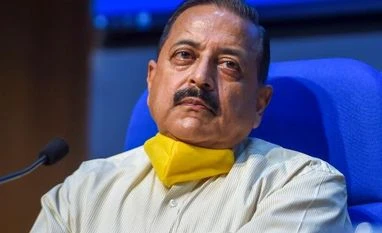
Chairing the meeting with Co-Chair Italy, Union Minister of State, Personnel, Public Grievances, Jitendra Singh said: "Economic offences have been a problem faced by many, especially when the offenders flee from the jurisdiction of the country. India has put in place specialised legislation in this regard, in the form of Fugitive Economic Offenders Act, 2018, the term wherein 'fugitive economic offender' (FEO) is defined as an individual against whom a warrant of arrest in relation to a Scheduled Offence has been issued by any court in India and who has left the country so as to avoid criminal prosecution; or the FEO abroad, refuses to return to face criminal prosecution."
The Minister also said the Enforcement Directorate has transferred assets worth about $180 billion to public sector banks that suffered losses to the tune of around $272 billion due to frauds committed by high-net-worth individuals.
The Minister informed the G-20 delegates that India's view is that strengthening of mechanisms for speedy confiscation of the proceeds of crime, both at home and abroad, will force the offenders to return to their home country.
He added that this will allow for an effective investigation and speedy trial for the related offence and this would also help the banks and other financial institutions and tax authorities to achieve recovery from defaults committed by such FEOs, thus restoring, to some extent, the overall health of these banks and other financial institutions, while eliminating the possibility of further misuse of these funds.
Singh said that corruption is a complex social, political, and economic challenge affecting all countries and in a globalised world, corruption has ramifications well beyond the G20.
He said it adversely impacts the effective utilization of resources, creates market distortions, adversely impacts the quality of life of citizens, impacting the benefits of globalisation and consequently, economic growth and overall governance and most disproportionately affecting the poor and most marginalised.
Singh said as the primary forum for global economic cooperation, the G20 has to take responsibility to lead global efforts towards battling the menace of corruption.
Since its inception in 2010, the G20 Anti-Corruption Working Group (ACWG) has been at the forefront of addressing all forms of corruption, the Minister added.
(Only the headline and picture of this report may have been reworked by the Business Standard staff; the rest of the content is auto-generated from a syndicated feed.)

 "India stresses on multilateral action for extradition of economic offenders")


 Connect with us on WhatsApp