India under Modi more likely to respond with force to Pak provocations: US
India, under Prime Minister Narendra Modi, is more likely than in the past to respond with military force to perceived or real Pakistani provocations, the US intelligence community has told Congress
Press Trust of India Washington India, under Prime Minister Narendra Modi, is more likely than in the past to respond with military force to perceived or real Pakistani provocations, the US intelligence community has told Congress in a report.
The Office of the Director of National Intelligence (ODNI) in its Annual Threat Assessment report to the US Congress, said although a general war between India and Pakistan is unlikely, crises between the two are likely to become more intense, risking an escalatory cycle.
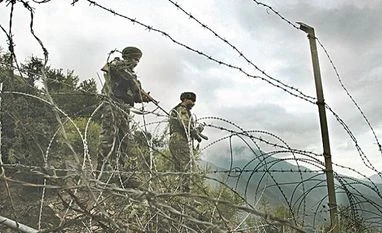
"Under the leadership of Prime Minister Narendra Modi, India is more likely than in the past to respond with military force to perceived or real Pakistani provocations, and heightened tensions raise the risk of conflict between the two nuclear-armed neighbours, with violent unrest in Kashmir or a militant attack in India being potential flashpoints," it said.
India and Pakistan are without high commissioners in each other's capital since the relations between the two countries nosedived after India withdrew the special status of Jammu and Kashmir and bifurcated the state into two union territories in August 2019.
India has said it desires normal neighbourly relations with Pakistan in an environment free of terror, hostility and violence and that the onus is on Islamabad to create an environment free of terror and hostility.
According to the ODNI report, the fighting in Afghanistan, Iraq, and Syria has a direct bearing on US forces, while tensions between nuclear-armed India and Pakistan remain a concern for the world.
The iterative violence between Israel and Iran, the activity of foreign powers in Libya, and conflicts in other areas including Africa, Asia, and the Middle East have the potential to escalate or spread, it said.
On Afghanistan, the ODNI report assessed that prospects for a peace deal will remain low during the next year.
"The Taliban is likely to make gains on the battlefield, and the Afghan Government will struggle to hold the Taliban at bay if the coalition withdraws support. Kabul continues to face setbacks on the battlefield, and the Taliban is confident it can achieve military victory, it said.
"Afghan forces continue to secure major cities and other government strongholds, but they remain tied down in defensive missions and have struggled to hold recaptured territory or reestablish a presence in areas abandoned in 2020, the report said.
(Only the headline and picture of this report may have been reworked by the Business Standard staff; the rest of the content is auto-generated from a syndicated feed.)

 "India under Modi more likely to respond with force to Pak provocations: US")


 Connect with us on WhatsApp