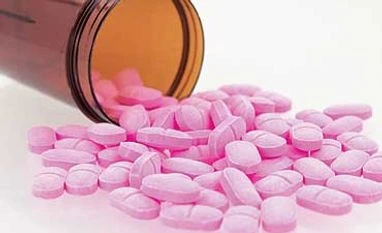
Tuesday was a landmark, albeit controversial, day for women's sexual health. The first prescription drug to enhance women's sexual drive won regulatory approval from the Food and Drug Administration in United States, after a sustained lobbying campaign that had accused the health regulator of gender bias for glossing over the sexual needs of women. The drug, Addyi from Sprout Pharmaceuticals, has been dubbed the "female Viagra" and the "pink pill" by the general public, which isn't entirely accurate.
Addyi, whose chemical name is flibanserin, is actually the first drug approved to treat a flagging libido for either sex. Viagra, on the other hand, works to treat erectile dysfunction or certain deficiencies of the hormone testosterone, not to increase desire. Addyi is designed for premenopausal women whose lack of sexual desire causes distress. The condition is formally known as hypoactive sexual desire disorder (HSDD). Unlike Viagra, which is only supposed to be taken on occasion, Addyi needs to be taken daily.
Sharmila Majumdar, a Hyderabad-based sexologist and psychoanalyst, clarifies a few details about HSDD. "HSDD falls under a specific category of female sexual dysfunction, that is female sexual arousal disorder. Existing epidemiological data on sexual dysfunction supports high prevalence; about 43 per cent women are affected by these problems worldwide."
The causes for HSDD too are wide and varied, and can range from "certain predisposing factors like restrictive upbringing, poor sex education, and traumatic sexual experience. Then you could have countless precipitating factors like relation discord, infidelity, performance anxiety, poor communication, guilt, fear of failure, loss of attraction and so on." All these problems are currently treated through various treatment methods, and a magic pink pill would certainly appear as a boon.
But just how effective is it?
In announcing the approval, Janet Woodcock, a senior FDA official, said the agency was "committed to supporting the development of safe and effective treatments for female sexual dysfunction. Because of a potentially serious interaction with alcohol, treatment with Addyi will only be available through certified health care professionals and certified pharmacies," she added. "Patients and prescribers should fully understand the risks associated with the use of Addyi before considering treatment."
As with any new medical treatment, Addyi is not without its vociferous share of critics, who have argued that the FDA has buckled under pressure from the women's movement to approve a drug that is at best minimally effective, and could cause side effects like low blood pressure, fainting, nausea, dizziness and sleepiness. Addyi's label will come with a strong boxed warning (the highest kind) and can only be prescribed by doctors, which seems to imply that the usage of the pill will also not be as widespread as Viagra.
Prakash Kothari, considered the country's first sexologist, is among those sceptical. According to the doctor, who set up the department of sexual medicine in Mumbai's KEM hospital, "Women's sexuality is a very complex subject. Addyi works on desire but there can be many reasons for lack of sexual desire - such as obsessive compulsive disorder, a dislike of partner, a dislike of partner's body odour, an organic medial problem, and so on. How is a single pill going to address all of these problems?" While he concedes that the FDA is supposed to exhibit strict standards, he believes Addyi can only work "as a placebo, or a fate cure."
Sprout, the manufacturer of the drug has tried to anticipate these concerns, and has clearly stated that Addyi is meant to treat generalised HSDD that is not caused due to either the effects of other drugs, problems within the relationship, or a co-existing medical or psychiatric condition. Kothari, however, remains unconvinced. He points out that conditions like OCD, depression, schizophrenia and other mental illnesses can completely blunt sexual desire, but most people who have them are rarely even diagnosed.
Addyi will go on sale in the US from October, but it's still some time before it makes it to Indian pharmaceutical shelves. "The doctors who do prescribe Addyi to their patients must be doctors of sexual medicine. This is a subject of psychopathology, but in India we have very few departments of sexual medicine and this subject isn't even taught in medical schools! If this drug comes to India, we will need to do a double study of our own," adds Kothari.
Majumdar has refrained from giving her personal opinion about the drug, but does believe that Indian women can benefit from it, as long as they take it under their doctors' supervision. "But we can comment on its efficacy only in the future - until then we can wait for reviews from patients using it and doctors prescribing it." But one thing all doctors seem to agree on, is that more research and breakthroughs need to continue being made in the area of women's sexual health.

 "Is Addyi really the 'female Viagra'?")


 Connect with us on WhatsApp