Only 26.3% wash hands before feeding their child: WaterAid India study

Women more likely to carry out the practice before preparing food & feeding, added the study
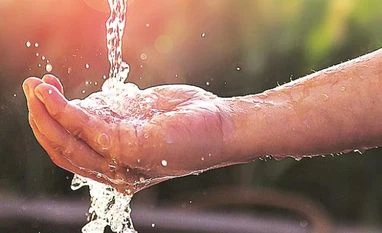
handwashing, hygiene, handwash
Wrong hygiene behaviour is a leading cause of death and disease, particularly diarrhoea among children under the age of five
Sanjeeb Mukherjee New Delhi
Last Updated : Oct 13 2017 | 12:35 AM IST
A new study by WaterAid India shows that only 26.3 per cent of parents washed their hands before feeding their children.
Wrong hygiene behaviour is a leading cause of death and disease, particularly diarrhoea among children under the age of five.

The study, titled ‘Spotlight on Handwashing in Rural India’, examines the level of awareness about practices related to hand hygiene behaviour in rural households in four states namely Bihar, Chhattisgarh, Rajasthan and Odisha.

A total of 1,319 respondents participated in this study, of which 57.1 per cent were women and 42.9 per cent were men. Of the total sample, 407 respondents (30.6 per cent) had children under five years; of this, 59.7 per cent were women.

To ascertain whether people washed their hands in the 24 hours preceding the survey, interviewers asked respondents to recall all the times they washed their hands in the previous day. Almost all respondents (99.8 per cent) stated that they washed their hands in the past 24 hours.

Respondents were more likely to have washed their hands after defecation (99.3 per cent) and before eating (91.9 per cent) than at other critical times such as before preparing food (50.1 per cent) and during childcare-related activities, particularly infant and young child feeding and disposal of child faeces.

Of the participants who had children of less than five years in their family, around 26.3 per cent washed their hands before child feeding, 14.7 per cent before breastfeeding, 16.7 per cent after disposing child faeces, and 18.4 per cent after cleaning a child’s bottom.

The lower proportion reporting handwashing associated with childcare activities may be reflective of the number of respondents who had young children in their households, the study said. There was minimal variation in handwashing practices after defecation and before eating in the past 24 hours across the four states, socio-economic categories, gender, and families with children under five years.

The study also showed that possibly due to their greater involvement in household chores and childcare activities, women were more likely to wash their hands before preparing food (74.9 per cent) and feeding children (18.6 per cent) than men (17.3 per cent and 4.6 per cent respectively).

More people from Bihar reported washing their hands before feeding children (18.3 per cent) and breastfeeding (11.9 per cent) compared to those from the other three states, while a higher proportion of respondents from Chhattisgarh washed their hands after washing a child’s bottom (16.8 per cent) and disposing child faeces (13.4 per cent) than those in Bihar, Odisha and Rajasthan.

Following up on handwashing practices, respondents were asked about the agents they used to clean their hands at each of the critical times. Soap was the preferred cleansing agent for activities that involved contact with faecal matter.

In fact, a greater proportion of respondents cleaned their hands after coming in contact with child faeces than after defecating themselves (though this difference is not significant).  The study showed that handwashing with soap at five critical times – after defecation, after cleaning a child’s bottom, before feeding infants/children, before eating and before food preparation – is estimated to reduce diarrhoeal diseases by 47 per cent.

The two main hygiene messages received from individuals were related to latrine use (74.2 per cent) and handwashing at critical times (65 per cent). In 2015, an estimated 321 children died every day due to diarrhoea, the second leading cause of death in India among children under the age of five years.

One subscription. Two world-class reads.

Already subscribed? Log in

Subscribe to read the full story →
*Subscribe to Business Standard digital and get complimentary access to The New York Times

Smart Quarterly

₹900

3 Months

₹300/Month

SAVE 25%

Smart Essential

₹2,700

1 Year

₹225/Month

SAVE 46%
*Complimentary New York Times access for the 2nd year will be given after 12 months

Super Saver

₹3,900

2 Years

₹162/Month

Subscribe

Renews automatically, cancel anytime

Here’s what’s included in our digital subscription plans

Exclusive premium stories online

  • Over 30 premium stories daily, handpicked by our editors

Complimentary Access to The New York Times

  • News, Games, Cooking, Audio, Wirecutter & The Athletic

Business Standard Epaper

  • Digital replica of our daily newspaper — with options to read, save, and share

Curated Newsletters

  • Insights on markets, finance, politics, tech, and more delivered to your inbox

Market Analysis & Investment Insights

  • In-depth market analysis & insights with access to The Smart Investor

Archives

  • Repository of articles and publications dating back to 1997

Ad-free Reading

  • Uninterrupted reading experience with no advertisements

Seamless Access Across All Devices

  • Access Business Standard across devices — mobile, tablet, or PC, via web or app

Next Story



