
Latest IPCC report calls for urgent climate adaptation measures: Experts
It also reconfirms for various stakeholders, including governments and the private sector, that 'the time to act is now'
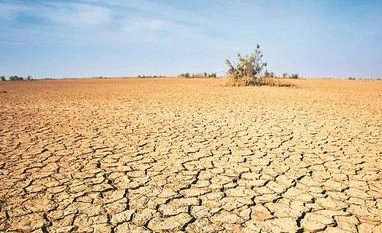 "Latest IPCC report calls for urgent climate adaptation measures: Experts")
WebinarsNew
Deep DiveNew
Explore Business Standard
It also reconfirms for various stakeholders, including governments and the private sector, that 'the time to act is now'
The latest IPCC report calls for urgent climate adaptation measures while warning about multiple disasters emerging in different parts of the world, environmental experts said on Tuesday.
It also reconfirms for various stakeholders, including governments and the private sector, that "the time to act is now".
The Intergovernmental Panel on Climate Change (IPCC) Working Group II released its latest report 'Climate Change 2022: Impacts, Adaptation and Vulnerability' on Monday which warned that globally, heat and humidity will create conditions beyond human tolerance if emissions are not rapidly eliminated and that India is among the places that will experience these intolerable conditions.
Watershed Organisation Trust (WOTR), an NGO working in the field of sustainable growth and well-being of disadvantaged societies in rural India, said the IPCC report highlights large gaps in the adaptation actions that are being taken and the efforts that are required.
"WOTR has been working to enhance partnerships and collaborations while up-scaling Ecosystem-based Adaptation (EbA) across nine states in around 5,200 villages.
"The impact and potential of EbA in sequestering carbon and building resilience to climate change is based on concrete evidence across varied geographies," WOTR said in a statement.
It said two decades of intensive ecosystem-based projects in drought-prone areas of Maharashtra have shown results such as a 30 per cent increase in the area of forest cover and plantations and eight to nine-fold increase in agricultural income.
"EbA-led interventions have helped ensure that over 50 per cent of the barren land is now cultivable and the soil carbon detachment has significantly reduced in the region," it said.
A Nambi Appadurai, Director, Climate Resilience Practice, World Resources Institute (WRI) India, said the report provides good reality check.
"IPCC's AR6 Working Group 2 report provides a good reality check in terms of where are today and where we go from here in terms of using adaptation as a response option. The report brings the best possible evidence together to establish a case for adaptation actions, including investments, responsive governance structures and integration of local knowledge," he said.
According to Ruchika Singh, Director, Sustainable Landscapes and Restoration Program, WRI India, the report reconfirms for key stake holders - governments, civil society, private sector - that the time to act is now and it's a short window for climate action.
"The grim news is that some human-induced climate change impacts are irreversible. The report's emphasis on enhanced vulnerability for people and the ecosystem due to systemic patterns of historical injustice, inequity due to colonialism and prevailing governance patterns is noteworthy.
"The outlook for South Asia is grim, with risks of rising temperatures and heat waves, droughts, and floods. With 85 per cent small and marginal landholders in India and with increased risk and vulnerability due to droughts and floods, the food production and access to food will be hampered, impacting nutritional security for the population," she said.
Sonia Roschnik, International Climate Policy Director, Health Care Without Harm, a global organisation working in the health care sector, said the report is urging for accelerated action.
"The IPCC report is urging us to accelerate action. Climate Change is increasingly impacting people's health all over the world. The health sector has a crucial role to play in transitioning its systems to low carbon and resilient practices - to improve health and promote action across communities, economies and society," she said.
(Only the headline and picture of this report may have been reworked by the Business Standard staff; the rest of the content is auto-generated from a syndicated feed.)
First Published: Mar 01 2022 | 9:13 PM IST


 Connect with us on WhatsApp