
Masks to be mandatory again in Delhi; Rs 500 fine for violators
The DDMA meeting emphasised strict enforcement of the SOPs for schools by the school management concerned
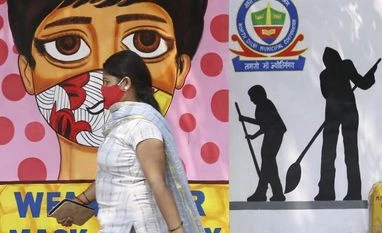 "Masks to be mandatory again in Delhi; Rs 500 fine for violators")
WebinarsNew
Deep DiveNew
Explore Business Standard
The DDMA meeting emphasised strict enforcement of the SOPs for schools by the school management concerned
In view of a spike in coronavirus cases in the national capital, the Delhi government on Wednesday decided to make the wearing of masks mandatory again in public places and impose a fine of Rs 500 in case of a violation.
The decision was taken at a meeting of the Delhi Disaster Management Authority (DDMA), which also decided not to shut schools and come up with separate Standard Operating Procedures (SOPs) in consultation with experts for them.
Lt Governor Anil Baijal in a series of tweets shared details of the DDMA meeting and said,"it was decided to make the wearing of masks mandatory in public places."
The government is expected to issue an official order regarding the mandatory use of masks soon. Fine on not wearing a mask was lifted by the Delhi government on April 2 after the decline in COVID cases in the city.
The DDMA meeting emphasised strict enforcement of the SOPs for schools by the school management concerned.
"In the larger interest of students, in case of non-compliance or violation of SOPs, a penalty as deemed appropriate should be imposed for creating a deterrent effect," Baijal tweeted.
Officials said authorities have been asked to keep a close watch on social gatherings and ramp up testing in the national capital.
They said Chief Minister Arvind Kejriwal is closely monitoring the situation and instructions have been issued to officials to ensure the implementation of steps to check the spread of the virus and preparations for the treatment of COVID patients.
In the DDMA meeting, emphasis was also laid on early vaccination of eligible groups as it will help keep in check the impact of the pandemic, officials said.
Several participants asserted that there was no need to panic since the number of hospitalisations was low despite a rise in COVID cases, they said.
It was highlighted that the trends of hospitalisation needed to be closely monitored for the next fortnight as well as conducting genome sequencing of all positive samples, put through the RTPCR test.
It was also decided to increase the number of tests being done with the focus on people with symptoms, they said.
The DDMA meeting, chaired by Baijal, was also attended by Kejriwal, Deputy CM Manish Sisodia, and other top officials and experts.
The LG advised all the agencies to remain vigilant and work in coordination to tackle the situation as it emerges.
According to official figures, there are 9,735 beds for COVID patients in Delhi hospitals and just 80 (0.82 per cent) of them were occupied.
The health department said 632 fresh cases were reported on Tuesday and the positivity rate was 4.42 per cent.
The number of daily COVID-19 cases in Delhi had touched the record high of 28,867 on January 13 this year during the third wave of the pandemic. The positivity rate had soared to 30.6 per cent on January 14, the highest during the third wave.
(Only the headline and picture of this report may have been reworked by the Business Standard staff; the rest of the content is auto-generated from a syndicated feed.)
First Published: Apr 20 2022 | 7:57 PM IST


 Connect with us on WhatsApp