Mission failure will not dent PSLV's reputation as trusted workhorse: Isro

Isro said that the rocket performed well during the mission
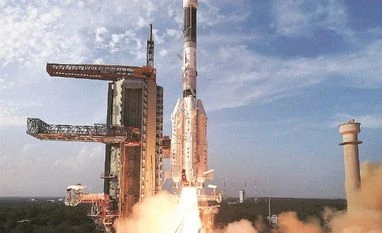
Isro, satellite, GSLV, PSLV
Isro
T E NARASIMHAN Chennai
Last Updated : Sep 01 2017 | 1:37 PM IST
Indian Space Research Organisation (Isro) on Friday ruled out reports suggesting that the failure of PSLV-C39 mission will dent rocket's reputation as trusted workhorse. Isro said that the rocket performed well during the mission.

Isro's attempt to put country's eighth navigation satellite in Orbit failed on Thursday. Questions are now being raised whether it will have any implication on its commercial interests.

"The satellite is inside the heat shield and we have to go through a detailed analysis to see what has happened," said A S Kiran Kumar, Isro chairman, soon after the failed launch. " Apart from the heat shield separation, all the rest of the activities have gone on smoothly, but in terms of the mission, it is unsuccessful because we are not in a position to put it to the actual orbit," he added.

Whether the failure would impact ISRO's commercial interest, Kumar said the PSLV has successfully carried out 39 consecutive launches in the past. "Only the heat shield separation, command and subsequent operations could not be completed. We have to analyse the details to pinpoint the exact reasons for the failure." 

The satellite was also the first one Isro built jointly with a private consortium, in its attempt to leverage India's private sector to build spacecraft in the country. "It would be unfair to target the private sector for the failure," Kumar said.

The IRNSS-1H, was built by a consortium led by Alpha Design Technologies, a defence equipment supplier from Bengaluru, over eight months. A team of 70 scientists from ISRO supervised the operations. The consortium was to build two satellites and the second is expected to be finished by April 2018.

So far, private firms have only built components and systems for India's satellites and rockets. Isro had planned to tap private players over a decade ago to build its satellites, but the experiment failed as it found the industry wanted large-scale commitment before it began work. Isro has already announced a tender to invite private firms to build bigger satellites.

One subscription. Two world-class reads.

Already subscribed? Log in

Subscribe to read the full story →
*Subscribe to Business Standard digital and get complimentary access to The New York Times

Smart Quarterly

₹900

3 Months

₹300/Month

SAVE 25%

Smart Essential

₹2,700

1 Year

₹225/Month

SAVE 46%
*Complimentary New York Times access for the 2nd year will be given after 12 months

Super Saver

₹3,900

2 Years

₹162/Month

Subscribe

Renews automatically, cancel anytime

Here’s what’s included in our digital subscription plans

Exclusive premium stories online

  • Over 30 premium stories daily, handpicked by our editors

Complimentary Access to The New York Times

  • News, Games, Cooking, Audio, Wirecutter & The Athletic

Business Standard Epaper

  • Digital replica of our daily newspaper — with options to read, save, and share

Curated Newsletters

  • Insights on markets, finance, politics, tech, and more delivered to your inbox

Market Analysis & Investment Insights

  • In-depth market analysis & insights with access to The Smart Investor

Archives

  • Repository of articles and publications dating back to 1997

Ad-free Reading

  • Uninterrupted reading experience with no advertisements

Seamless Access Across All Devices

  • Access Business Standard across devices — mobile, tablet, or PC, via web or app

Next Story



