National Clean Air Programme: Govt to reduce 40% particulate matter by 2026
Centre set a new target of 40% reduction in particulate matter concentration in cities covered under the National Clean Air Programme by 2026, updating the earlier goal of 20 to 30 reduction by 2024
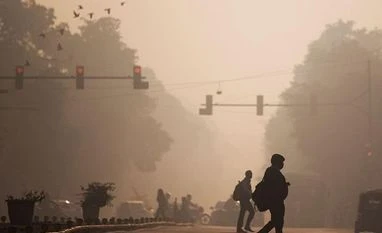
Press Trust of India New Delhi The Centre has set a new target of 40 percent reduction in particulate matter concentration in cities covered under the National Clean Air Programme (NCAP) by 2026, updating the earlier goal of 20 to 30 percent reduction by 2024, officials have said.
According to the Union Environment Ministry, 95 of the 131 non-attainment cities covered under the NCAP have witnessed an overall improvement in PM10 levels in 2021 as compared to 2017 levels.
Twenty cities, including Chennai, Madurai and Nashik, have met the national standards for annual average PM10 concentration (60 microgram per cubic metre). The acceptable annual standard for PM2.5 is 40 micrograms per cubic metre.
PM2.5 are fine inhalable particles, with diameters that are generally 2.5 micrometers and smaller, and pose the greatest risk to health.
The 132 cities covered under the NCAP did not meet the prescribed national ambient air quality standards for five consecutive years (2011-2015).
"The goal of 20 to 30 percent reduction in PM levels has to be met by 2024. The results under NCAP have been good so far. So, we have decided to update the reduction target to 40 percent by 2026," an official of the environment ministry said.
Under NCAP, city-specific action plans have been prepared which include measures for strengthening the air quality monitoring network, reducing vehicular and industrial emissions, increasing public awareness, etc.
"The cities are also updating their action plans to meet the updated targets," the official said.
Cities that showed overall improvement in PM 10 concentration since 2017 include Delhi, Noida, Ghaziabad, Mumbai, Kolkata, Chennai, Bengaluru, Chandigarh, Dehradun, Patna, Nagpur, Pune, Agra, Allahabad, Bareilly, Firozabad, Moradabad, Kanpur, Varanasi, Jalandhar, Ludhiana, Jaipur, Jodhpur, Jamshedpur, Ranchi, Raipur among others.
In Delhi, the PM10 concentration has reduced from 241 micrograms per cubic metre in 2017 to 196 micrograms per cubic metre in 2021.
(Only the headline and picture of this report may have been reworked by the Business Standard staff; the rest of the content is auto-generated from a syndicated feed.)

 "National Clean Air Programme: Govt to reduce 40% particulate matter by 2026")


 Connect with us on WhatsApp