Odisha wins GI tag, but popularising its rasagola won't be a piece of cake

The culinary delight has seen a long-drawn-out battle with West Bengal
rasagola, rosogolla
Nirmalya Behera
4 min read Last Updated : Aug 16 2019 | 10:20 PM IST
On August 15, Tillottama Behera stepped into Kar and Brothers, in Odisha’s Salepur town, hoping to buy rasagola on her way to celebrate the festival of Rakshabandhan. But the disappointed customer had to settle for other sweets after being told that they had run out — by 11 in the morning. 

"Rasagola was completely sold out not only in our Salepur outlet but in our outlets in Cuttack and Bhubaneswar because of the simultaneous celebration of Rakshabandhan and Independence Day,” exclaims a delighted Sai Sibani Kar, director at Kar and Brothers. Approximately 40,000 syrupy balls of different sizes were sold on the day.

Salepur is a town in Odisha’s Cuttack district, remarkable largely for the popularity of Bikalananda Kar's sweetmeats. “Odisha Rasagola” received the Geographical Indications (GI) tag in July 2019, and is a ubiquitous item at every celebration in the state. The culinary delight made of cottage cheese has seen a long-drawn-out battle with neighbouring West Bengal over its origin. While Bengal celebrated 150 years of the invention of its rossogolla by Nabin Chandra Das in 2018, Odisha claimed that its rasagola was served at the 12th-century Jagannath temple in Puri centuries earlier.

"Odisha has enough historical records to prove that this sweet originated in the land of Jagannath. But many are yet to learn, know, accept, believe that rasagola has been associated with the Shri Jagannath Temple culture and the world famous Rath Yatra of Puri for centuries,” stresses Anita Sabat, a researcher who played a key role in drafting and coordinating the Odisha Rasagola GI application. Rasagola is traditionally offered as bhoga to appease the goddess Lakshmi at Puri’s Jagannath Temple on Niladri Bije, the last day of the Rath Yatra. 

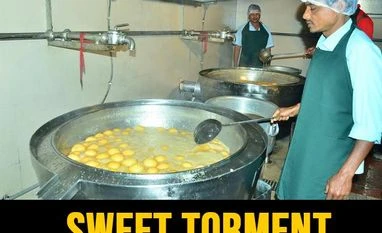
The state boasts of about 20,000 rasagola makers, a largely unorganised lot, who prepare the sweetmeat in different shapes, size and colours. The annual rasagola turnover is estimated to be over Rs 5,000 crore in Odisha. The sweet pride of the state is said to be soft and juicy, and can be swallowed without needing to be chewed. The colour of the rasagola is a complex and nuanced business, too, where these sweet balls are prepared without the assistance of artificial colour. The item is usually white and round; off-white rasagola are prepared by blending fresh and stored sugar syrup in a 60:40 proportion, cooking it at 110 degrees C for about 50 minutes. This results in caramelisation that produces natural off-white coloured variations that give the rasagola its distinctive look.

While the state is thrilled with the GI tag — state-run Odisha Small Industries Corporation Limited (OSIC) and Utkal Mistanna Byabasayee Samiti (UMBS) are recognised proprietors — the challenges of taking it out of Odisha are considerable. Sold loose and with a shelf life of a maximum of two days, exporting the product is a difficult affair.

"This sector must be made organised with proper management and quality control. Information and awareness is needed. Authorised Users (AUs) must be registered for the Odisha Rasagola GI. The GI logo and tagline along with the Odisha Rasagola logo must be prominently displayed in the packaging material and shops of AUs," suggests Sabat.

To address the dearth of skilled manpower, Prasanta Kumar Kar, proprietor of Kar and Brothers, has set up the first industrial training institute to offer courses in Sweets Technology. “UMBS is impressing upon the state government the need to set up a workshop at Pahala, which has about 100 rasagola outlets along the highway that connects Bhubaneswar and Cuttack. In addition, sweet hubs must be established in key cities of the state,” says Kar, chief advisor to the Samiti.

To celebrate the achievement of the GI tag and create awareness about its significance, UMBS intend to distribute 50,000 rasagola on August 19. They will also organise a meet on the occasion to find ways to find a bigger market for the syrupy sweet delicacy.

“OSIC being the applicant, we will be supporting the marketing, branding and quality of the sweet. In addition, we will be moving the Airports Authority of India through the state government to open stalls at airports. OSIC will also be writing to the government for setting up a rasagola cluster,” says Prasanna Kumar Jena, managing director, OSIC.

One subscription. Two world-class reads.

Already subscribed? Log in

Subscribe to read the full story →
*Subscribe to Business Standard digital and get complimentary access to The New York Times

Smart Quarterly

₹900

3 Months

₹300/Month

SAVE 25%

Smart Essential

₹2,700

1 Year

₹225/Month

SAVE 46%
*Complimentary New York Times access for the 2nd year will be given after 12 months

Super Saver

₹3,900

2 Years

₹162/Month

Subscribe

Renews automatically, cancel anytime

Here’s what’s included in our digital subscription plans

Exclusive premium stories online

  • Over 30 premium stories daily, handpicked by our editors

Complimentary Access to The New York Times

  • News, Games, Cooking, Audio, Wirecutter & The Athletic

Business Standard Epaper

  • Digital replica of our daily newspaper — with options to read, save, and share

Curated Newsletters

  • Insights on markets, finance, politics, tech, and more delivered to your inbox

Market Analysis & Investment Insights

  • In-depth market analysis & insights with access to The Smart Investor

Archives

  • Repository of articles and publications dating back to 1997

Ad-free Reading

  • Uninterrupted reading experience with no advertisements

Seamless Access Across All Devices

  • Access Business Standard across devices — mobile, tablet, or PC, via web or app

Topics :rosogolla West BengalOdisha's Rasagola

Next Story


