Home / Health / One shot of Pfizer, AstraZeneca vax offers 60% protection against Covid
One shot of Pfizer, AstraZeneca vax offers 60% protection against Covid
A single dose of either the Pfizer or AstraZeneca Covid-19 vaccine offers around 60 per cent protection against infection from SARS-CoV-2, the virus causing Covid-19, in adults aged 65 years and above
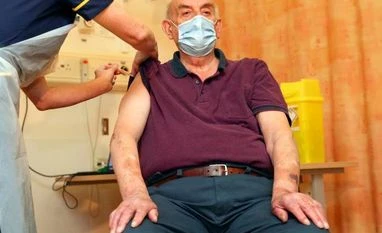
82-year-old Brian Pinker receives the Oxford University/AstraZeneca Covid-19 vaccine. (Steve Parsons/Pool Photo via AP)
A single dose of either the Pfizer or AstraZeneca Covid-19 vaccine offers around 60 per cent protection against infection from SARS-CoV-2, the virus causing Covid-19, in adults aged 65 years and above, according to a new study published in the The Lancet Infectious.
The study, led by researchers from the University College London, in the UK showed that the protective effect of a single dose of vaccination is evident from four weeks to at least seven weeks after vaccination, which provides some evidence to support extension of the interval between doses beyond three weeks, in line with UK policy.
"However, even beyond four weeks, a single vaccine dose does not eliminate infection risk, highlighting the continued importance of non-pharmaceutical measures to control transmission within long-term care facilities," said Madhumita Shrotri and Laura Shallcross, from the UCL Institute of Health Informatics.
The study will be critical to inform policy decisions regarding revaccination schedules in this vulnerable population and the disease control measures needed in the short, medium, and long term to protect long-term care facilities from future waves of SARS-CoV-2 infection, the team said.
The team analysed 10,412 care home residents aged 65 years and older from 310 facilities, with a median age of 86 years. Of these 1,155 residents had evidence of previous SARS-CoV-2 infection.
A total of 9,160 (88 per cent) residents received at least one vaccine dose during the study period, of whom 6,138 (67 per cent) received AstraZeneca (ChAdOx1) and 3,022 (33 per cent) received Pfizer (BNT162b2).
Between December 8, 2020 and March 15, 2021, there were 36,352 PCR tests carried out, with 1,335 PCR-positive infections detected (713 in unvaccinated residents and 612 in vaccinated residents).
The risk of infection was 56 per cent lower in vaccinated residents after 28 to 34 days, days, and 62 per cent lower at 35-48 days. Similar effect sizes at 35-48 days were seen for the AstraZeneca vaccine (68 per cent reduced risk of infection) and the Pfizer vaccine (65 per cent reduced risk).
The study will be presented at the 2021 European Congress of Clinical Microbiology and Infectious Diseases (ECCMID) to be held from July 9-12.
--IANS
rvt/in
(Only the headline and picture of this report may have been reworked by the Business Standard staff; the rest of the content is auto-generated from a syndicated feed.)

 "One shot of Pfizer, AstraZeneca vax offers 60% protection against Covid")


