Over 370 deaths in 5 years: How many more till manual scavenging ends?

Developing technology to eliminate human involvement in sewer cleaning in India is still in the nascent stages
sewage, manual scavenging
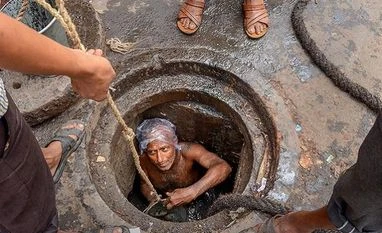
A Municipal Corporation worker enters a manhole for sewage cleaning at Mahatama Gandhi Road, in Kolkata
IndiaSpend
2 min read Last Updated : Mar 23 2020 | 2:43 AM IST

Don't want to miss the best from Business Standard?

Finance Minister Nirmala Sitharaman said the government would employ technology for cleaning sewer systems and septic tanks, and eliminate the need for manual cleaning both through technology and legislation in her Budget speech on February 1. But, even though a law to ban the manual cleaning of sewers was passed in 1993, more than 370 sanitation workers have died in the five years to 2019 while manually cleaning sewers. Developing technology to eliminate human involvement in sewer cleaning in India is still in the nascent stages and caste is a major barrier to eliminating manual cleaning.

Unimplemented legislation

The direct handling of human excreta by sanitation workers has been banned since 1993 under the Employment of Manual Scavenging and Construction of Dry Latrines (Prohibition) Act, which also prohibited the construction and maintenance of dry latrines. Since December 6, 2013, manual scavenging has been banned under the Prohibition of Employment as Manual Scavengers and their Rehabilitation Act, 2013. Yet, manual scavenging and cleaning sewers and septic tanks continues. Even in the age of robotic technology, there has not been much headway in changing how sanitation work is carried out in India, experts said.

Claim: “Our government is determined that there shall be no manual cleaning of sewer systems or septic tanks. Suitable technologies for such tasks have been identified by the Ministry of Housing and Urban Affairs. The ministry is working with urban local bodies for the adoption of these technologies. We will now take this to its logical conclusion through legislative and institutional changes. Financial support for wider acceptance of such technologies will be provided.” (Budget 2020-21)

Fact: There were 376 deaths in five years to 2019, while cleaning sewers and septic tanks, with 110 deaths in 2019. Technology for cleaning sewers and septic tanks is at a nascent stage and does not offer a comprehensive solution.


One subscription. Two world-class reads.

Already subscribed? Log in

Subscribe to read the full story →
*Subscribe to Business Standard digital and get complimentary access to The New York Times

Smart Quarterly

₹900

3 Months

₹300/Month

SAVE 25%

Smart Essential

₹2,700

1 Year

₹225/Month

SAVE 46%
*Complimentary New York Times access for the 2nd year will be given after 12 months

Super Saver

₹3,900

2 Years

₹162/Month

Subscribe

Renews automatically, cancel anytime

Here’s what’s included in our digital subscription plans

Exclusive premium stories online

  • Over 30 premium stories daily, handpicked by our editors

Complimentary Access to The New York Times

  • News, Games, Cooking, Audio, Wirecutter & The Athletic

Business Standard Epaper

  • Digital replica of our daily newspaper — with options to read, save, and share

Curated Newsletters

  • Insights on markets, finance, politics, tech, and more delivered to your inbox

Market Analysis & Investment Insights

  • In-depth market analysis & insights with access to The Smart Investor

Archives

  • Repository of articles and publications dating back to 1997

Ad-free Reading

  • Uninterrupted reading experience with no advertisements

Seamless Access Across All Devices

  • Access Business Standard across devices — mobile, tablet, or PC, via web or app

Topics :Nirmala SitharamanSewage Water TreatmentManual scavengersFinance minister

Next Story



