
Over 80 migratory birds found dead in Jodhpur, Ranikhet disease suspected
Senior veterinarian Sharavan Singh Rathore said around 100 sick birds are being treated and prima facie they are infected with Ranikhet disease
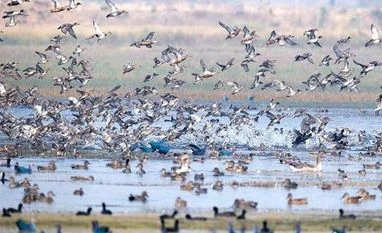 "Over 80 migratory birds found dead in Jodhpur, Ranikhet disease suspected")
WebinarsNew
Deep DiveNew
Explore Business Standard
Senior veterinarian Sharavan Singh Rathore said around 100 sick birds are being treated and prima facie they are infected with Ranikhet disease
Over 80 demoiselle cranes have been found dead in Karpada village of the district in the past three days, with health officials suspecting that the birds have fallen prey to the viral Ranikhet disease.
Carcasses of the migratory birds, known as Kurjan here, were first spotted by local wildlife activist Bhajan Lal Nain on Saturday, who informed the wildlife department and other wildlife activists, following which the forest department swung into action and sent a team comprising veterinarians to the spot.
Senior veterinarian Sharavan Singh Rathore said around 100 sick birds are being treated and prima facie they are infected with Ranikhet disease.
The viscera samples of some dead birds have been sent to a laboratory in Bhopal and the report is expected in two days.
Ranikhet disease, which is also know as Newcastle disease in the west, is an acute viral disease that affects the respiratory system of avians and is highly fatal.
We immediately started our investigation and found the deaths caused by Ranikhet disease based on symptoms. In order to make sure that the infection did not spread to other birds, we disposed of the carcasses at a distant place in deep pits to do away with the possibility of dogs or other animals digging out them, said a forest official.
The veterinarians also began with treatment of sick birds, which were not able to fly and dropped medicines in water points.
"We have also dissolved medicines in water points so that it could treat the already infected birds and protect other healthy birds from this dreaded infection, said Rathore.
Some of the birds flew to other places but we are trying to keep the remaining birds from flying so that they do not mingle with other healthy birds at some other spot and spread infection there, said Rathore.
We are also trying to keep other flocks of birds from landing at this point until we are assured that all the birds at the site in question were safe and healthy, he said.
Earlier, a large number of migratory birds died of Avian Botulism in Sambhar Lake of Rajasthan in November 2019. The NGT had intervened in these mass deaths and had constituted a committee for the probe.
A report submitted by the committee had apprehended that the deaths of such a large number of birds were caused by violation of environmental norms in maintaining the ecosystem of the wetland of Sambhar.
(Only the headline and picture of this report may have been reworked by the Business Standard staff; the rest of the content is auto-generated from a syndicated feed.)
First Published: Nov 09 2021 | 2:57 PM IST


 Connect with us on WhatsApp