Quietly, India is helping build world's largest nuclear fusion reactor
Aims to build the tokamak reactor, which can produce 10 times the energy that it takes to be initiated, by 2019
Vandana Yadav New Delhi Near the banks of the Sabarmati, in the green city of Gandhinagar, a team of 122 scientists and engineers from across India is working silently on building some crucial nuclear components. These are meant to power the world’s largest nuclear reactor, coming up in the Cadarache province of southern France.
At a time when an impasse over the Indo-US nuclear deal has been broken (in January) and both countries are looking forward to steering their ‘123 agreement’, and when the world is talking about nuclear non-proliferation, India is working diligently to build the International Thermonuclear Experimental Reactor (ITER) by 2019.
Amid hushed voices on the threat that nuclear power might pose and past horrors, ITER’s motivated team of scientists and trainees works in tandem with the Institute for Plasma Research (IPR).
A mega international nuclear fusion research & engineering project, ITER is currently building the world’s largest experimental tokamak nuclear fusion reactor. A tokamak is a device that uses a magnetic field to confine plasma (fourth state of matter) in the shape of a torus.
The ITER project aims to make the long-awaited transition from experimental studies of plasma physics to full-scale electricity-producing fusion power plants. It is seen as a method for electricity production from fusion energy — one for the future. The most vital aim is to produce at least 10 times more thermal energy than that required to operate it. This energy could be converted into electricity in future power-producing reactors. Scientists have dreamt of accomplishing this feat for half a century, but it wasn’t until 2006 that some progress was made with the formation of ITER.
ITER’s mission is to demonstrate the feasibility of fusion power, and to prove it can work without any negative impact.
Conceptualised in 1985, after an initiative by President Mikhail Gorbachov of the erstwhile Soviet Union and President Ronald Reagan of the US, the ITER project is funded and run by seven member entities — the European Union, India, Japan, China, Russia, South Korea and the US. It will be built mostly through in-kind contributions by the partners, where they manufacture the ITER components assigned to them through their representative Domestic Agencies (DAs). These components are then delivered to the ITER site for final assembling.
The ITER fusion reactor has been designed to produce 500 Mw of output power, with an input of just 50 Mw to operate. Production of more energy from the fusion process than that required to initiate the machine — ITER’s main aim — is unprecedented for fusion reactors.
The construction phase of the facility is expected to be completed in 2019; it will start commissioning the reactor the same year and initiate plasma experiments in 2020. Full deuterium-tritium fusion experiments will start in 2027. If ITER becomes operational, it will become the largest magnetic confinement plasma physics experiment in use, surpassing the Joint European Torus.
India is providing a 10th of the components for the massive nuclear complex being set up at Cadarache. New Delhi is contributing what on completion in 2021 will be the world’s largest refrigerator. The cryostat acts like a thermos flask but operates at some of the lowest temperatures seen in the universe — at minus 269 degrees celsius. This is used for keeping the special super conducting magnets at the low temperature at which they need to operate. The entire fusion system will collapse if it can’t be kept cold.
India is also expected to contribute about Rs 9,000 core over the next decade to the project, paying a little under 10 per cent of the total cost.
Ratan K Sinha, chairman of the Atomic Energy Commission, Mumbai, had recently remarked: “Participation of India in the ITER project, with its immense scientific talent and industrial competence, has provided an opportunity to India to master cutting-edge technologies.”
Note: As a research trainee with ITER-India, this writer became part of the ITER team and witnessed first-hand the technical struggles and mitigating efforts to address glitches. The small team is working with great fervour to produce all power sub-systems within the stipulated deadline. India is expecting positive results and successive project successes in the coming decade.

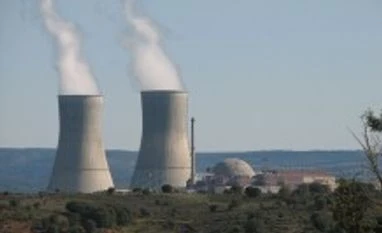 "Quietly, India is helping build world's largest nuclear fusion reactor")


 Connect with us on WhatsApp