Jawaharlal Nehru University (JNU) students’ leader Kanhaiya Kumar failed to get relief from the Supreme Court on Friday, as it refused to hear his bail plea on the ground that it would set a “dangerous precedent” and asked him to approach the Delhi High Court, which he did without immediate hearing on it.
Escorted by the police, Kumar’s lawyers Sushil Bajaj and Vrinda Grover rushed to the high court’s Registrar and mentioned the petition.
Security was strengthened at the high court, not far away from the Patiala House Courts, which was the scene of the attack by unruly lawyers on Kumar and journalists on Monday and Wednesday.
There appeared to be some technical glitches in the petition for which some rectification papers have been sought.
High court sources said the bail plea may come up for hearing either on Monday or Tuesday. Earlier, the drama surrounding the high-profile accused Kumar, who has been slapped with sedition charges, took a new turn when the Supreme Court transferred the bail plea after declining to entertain it.
“You are leading a dangerous proposition. If this court entertains it (bail plea bypassing courts below it), it will become a precedent available to all the accused in the country.
“In every case if it is said that the Supreme Court is the only court (to hear the matter), it would be a dangerous precedent,” a Bench comprising justices J Chelameswar and A M Sapre said.
Further, it observed, “Remember, this is not the only case of this type.”
Solicitor General Ranjit Kumar strongly opposed the hearing of the plea by the apex court saying a wrong message would go that the High Court is incapable looking into the matter.
He said the accused has appropriate alternative remedies and the matter should be considered accordingly. The apex court Bench was not in agreement with the arguments advanced by a battery of senior advocates including Soli Sorabjee, Raju Ramachandran and Rajeev Dhawan, that the extra- ordinary law and order situation, threat to life of the accused and his counsel, hostile environment at the lower court and the simmering situation compelled them to rush directly to it.
They also submitted that they moved the highest court for bail as already a writ petition concerning the arrest of the Jawahlal Nehru University Students’ Union president was pending before it.
However, their submission was objected to by the lawyers for the Centre and Delhi Police, the solicitor general, ASG Tushar Mehta and senior advocate Ajit K Sinha, who said the facts in the writ petition and the bail plea are different. They opposed it being heard directly by the Supreme Court.
“What is under scrutiny is something different and the writ petition is to be heard on Monday. It is totally different from the bail application,” the bench observed.
When the argument was made by Kumar’s counsel about the law and security situation, the bench said, “We do agree with you that it is an exceptionally extraordinary circumstance.”
The counsel said that they preferred the apex court to hear his bail plea as the situation in the high court also would not be much different.
The bench then asked, "Is it so in the high court? Are we to understand that the lawyers in HC are also agitated?" While concluding the 90-minute hearing, the bench said, “We permit them to make and amend the bail application on Friday itself.”
While transferring the bail plea, the bench took an assurance from solicitor general that in the "prevailing extraordinary situation" pertaining to this matter, the Government of India and the Delhi Police commissioner would provide adequate safety and security to the accused and a team of lawyers, who will be appearing in the high court.

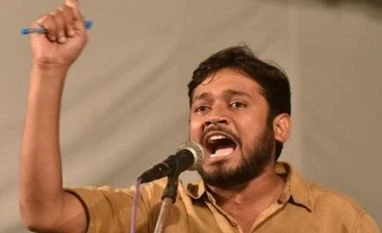 "SC asks Kanhaiya to take bail plea to high court")


 Connect with us on WhatsApp