Home / India News / There is an unconscious bias in many industries, companies: Katrina Fotovat
There is an unconscious bias in many industries, companies: Katrina Fotovat
Katrina Fotovat is looking to help support women entrepreneurs and women employees to help better shape their own and their community's economic future
5 min read Last Updated : Apr 05 2022 | 6:10 AM IST
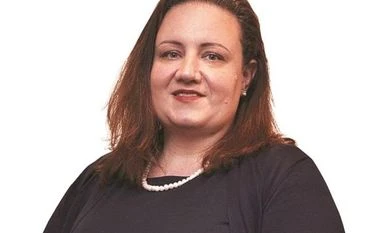
When US government official Katrina ‘Kat’ Fotovat was near New Delhi during the pandemic, she met with a lady at a Covid-19 relief centre who had lost both her son and her daughter. She was raising her grandchildren alone using the money she earned from a small business. In her role as a senior official to the secretary of state in the Office of Global Women’s Issues, Katrina Fotovat is looking to help support similar women entrepreneurs and women employees help better shape their own and their community’s economic future as part of the US-India Alliance for Women’s Economic Empowerment; a joint initiative between the US state department, development agency USAID, business advocacy group US-India Strategic Partnership Forum and George Washington University. She spoke to Sachin P Mampatta on what she’s trying to achieve, the push-back to women’s representation on company boards and more. Edited excerpts:
What does the alliance do?
It provides an umbrella framework to be able to bring in giants of the sectors as well as civil society as well as women. We always say ‘nothing about them without them.’ So we bring those pieces together as well as academic institutions and think tanks. We were talking to some of the industry leaders and they were saying they’re working on different aspects of diversity and inclusion while trying to get women into leadership positions. And they were comparing notes on working together, figuring out the best practices and leveraging each other’s effort. And really having that groundswell of collective effort we think will make a huge difference. And having the Indian government as well being so supportive and looking at their own initiatives, it has the potential to be a global example…. India is such a high priority for the Biden administration and President Biden has over the last year put forth many initiatives and priorities to make sure gender was included. My overall position is to make sure that gender is integrated into all the foreign policy work that the US government as a whole does.
Would you be providing financial support to women entrepreneurs?
There is a component of that as well. We are working with partners and making sure that we work with local women entrepreneurs. There are opportunities for some people in the banking industry to provide greater access to finance and to provide skill-sharing with that.
Would the interventions focus more on the white-collar or blue-collar workers?
I think a lot of that will depend on industry needs. Indian women, in terms of percentages, are actually getting through universities at higher levels than men. But in terms of longevity within the working environment…there is that kind of leaky faucet process of getting into the work and then often for family care reasons and commitments, they then leave the workforce. The OECD (Organisation for Economic Co-operation and Development) did a study which showed companies that had women in leadership positions, and especially board of director positions, are more likely to have family-friendly, gender-friendly hiring processes and practices. There is an unconscious bias that exists in many industries and in many companies. So we want to make sure to address that.
What is your view on the debate around women’s representation on company boards, emerging organically versus through mandate?
I think partnering again with the industry is important to make sure that they are implementing processes and procedures that are helpful to them. That business case has already been made. I will say every single time some new initiative starts that includes women in leadership positions, the first five years could often see constant push back… then it could become incredibly successful suddenly. So in terms of having women on board of directors, I think that’s great…however we recognise the importance of making sure that the industry is leading from its perspective.
There were some states in a recent survey where over 80 per cent of women reportedly believed it was okay for men to beat their wives. How do you see this changing?
Gender-based violence is a huge challenge and barrier to women’s economic empowerment...the interesting piece of that is that it is also such a challenge and barrier to the empowerment of families themselves. Many men don’t even realise their own costs (arising from) gender-based violence …to their families and how it inhibits their children, their wives, their own economic potential. What is also interesting is how much gender-biased violence affects the community and the country. There is financial cost, a prosperity cost, there are huge implications of gender-based violence across the board and certainly that inhibits women’s ability to be effective in the workplace. This is absolutely an issue that needs to be addressed. I think education and awareness are huge components of that but as are stopping the cycles of violence. We cannot normalize this.
Could you elaborate on how it affects a family’s economic potential?
If there is gender-based violence in the house, your child is less likely to be successful…most parents want their families to be happy and successful and do what’s best for them. So it’s important to make people understand the statistics around children who grow up in abusive homes or the effects of depression and other psychological effects on women in the house and how that also affects their children. So, your prosperity as a family and as a community is inhibited when violence is a piece of that.

 "There is an unconscious bias in many industries, companies: Katrina Fotovat")











