Home / India News / Uber withdraws plea from Delhi HC against its ban
Uber withdraws plea from Delhi HC against its ban
Says it is exploring other remedies under the law
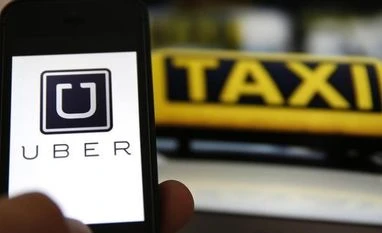
An illustration picture shows the logo of car-sharing service app Uber on a smartphone next to the picture of an official German taxi sign in Frankfurt
US taxi-hailing service Uber has withdrawn an appeal in the Delhi High Court against its ban by the Delhi Transport Authority on December 8. The company's lawyer told the court Uber was exploring other remedies available to it in the law. In an order on January 1, the Delhi Transport Authority extended the ban on Uber and said there were no grounds to review it. Uber’s operations in Delhi will remain suspended.
The move leaves more space for Uber to decide its course of action. The options include applying for a licence under the amended radio taxi norms that include aggregators now or continuing to lobby for more favourable regulations or re-appealing in court. The company can also re-appeal in the court against the ban. However, the going may not be easy for Uber from here on as the amended Radio Taxi norms go against its business model and respite from any other corner seems unlikely.
Meanwhile, the company will continue to support its driver partners in the capital. In an official statement, the company said, “Uber appeared at the Delhi High Court today and withdrew its petition against the ban. The petition was withdrawn with liberty to avail remedies as may be available under law. We continue to have faith in the judicial and executive system, trusting that the interests of Delhi’s riders, and livelihoods of our driver-partners would be central to any decision.”
The Delhi Transport Authority in its order claimed Uber and OlaCabs were violating the Motor Vehicles Act by plying vehicles with all-India tourist permits within the national capital region. They were also flouting other rules such as running petrol and diesel taxis in Delhi where the law demands all public transport to run on compressed natural gas.
During the proceedings, the judge pulled up transport officials as taxis of companies like OlaCabs were continuing to operate despite the ban.
Web-based taxi companies, including Uber and OlaCabs, were banned from operating in Delhi on December 8 after a taxi driver on Uber’s network allegedly raped a 27-year-old finance executive.
Uber and OlaCabs had approached the Delhi High Court requesting quashing of the ban. The court directed the Delhi Transport Authority to hear the petition and pass an order. While OlaCabs managed to receive a stay on the ban order, Uber was directed to appear before the transport department.
In its order on Uber, the authority said, "They (Uber) provide a simple taxi service by transporting people from one point to another through a vehicle driven by a driver for a fee, which is collected by the petitioner company directly from the passenger. They are thus, a taxi, pure and simple… they are required to follow the law of the land and by using an AITP (all-India tourist permit) taxi for local point-to-point drop, as in the present case, the petitioner has violated the prevailing law of the land.”

 "Uber withdraws plea from Delhi HC against its ban")


 Connect with us on WhatsApp